Shoulder Injury Rehabilitation
Focus Physical Therapy 100% guarantees fast and effective treatment.
SUPER DISCOUNT! 20% off all therapies in June! Call us 24/7!
Do not treat yourself based on information from the Internet!
 +381 64 469 73 73
 -

- Blog
- Shoulder Injury Rehabilitation

 Shoulder Injury Rehabilitation
  Symptoms
  Causes
 Gallery
  Testimonials
  Why choose us?
 Shoulder Injury Rehabilitation
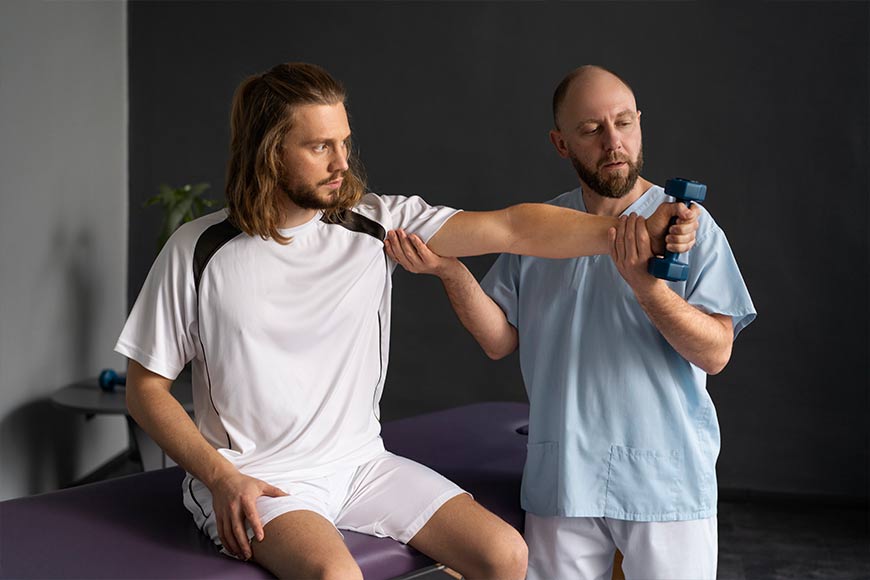
In modern medical rehabilitation, recovery of the shoulder after an injury places high demands on the clinical team, since the shoulder is one of the most complex and mobile joints in the human body. The healing of injured rotator cuff tendons and muscles does not progress in a strictly linear way; it requires careful dosing of physical therapy modalities, along with continuous monitoring of the patient’s response to treatment. At Fokus Fizikal, we apply treatment protocols aimed at supporting recovery of the deeper structures of the shoulder joint, in combination with a carefully planned rehabilitation program.
The basis of our approach lies in understanding the changes that occur within the joint capsule and surrounding soft tissues after injury. When tissue is exposed to trauma, pain, reduced local circulation, and impaired tissue function may slow down the recovery process. By using modalities such as targeted electrotherapy, therapeutic ultrasound, and modern forms of laser therapy, together with individually tailored exercises, we aim to support circulation, reduce pain, and encourage the healing of affected tissues.
A special emphasis is placed on individualizing the treatment plan, because every shoulder injury has its own specific characteristics. Through carefully guided phases of protection, recovery, and functional reconditioning, the patient is gradually introduced to active exercises that help restore strength, stability, and range of motion. In this way, we do not focus only on the consequences of the injury, but also on reducing the risk of future problems.
The ultimate goal of this approach is to achieve a functional and stable shoulder that can tolerate daily and sports-related activities with less pain and better mobility. Through continuous monitoring of progress and appropriate adjustment of treatment, we aim to support long-term recovery and a safe return to the patient’s usual activities.
Symptoms
Symptoms that indicate a more serious disorder of shoulder girdle function often begin subtly and almost imperceptibly, but without adequate and timely intervention they may progressively lead to permanent limitation of movement and a reduced quality of life. The shoulder is a joint that depends on the precise coordination of muscles, tendons, and ligaments, so even a minor imbalance can trigger a chain reaction of dysfunction. The clinical presentation of patients in our clinic in Belgrade most commonly includes the following manifestations:
• Progressive pain during abduction and rotation: A characteristic pain that occurs when the patient tries to lift the arm to the side or reach for an object behind the back. In the initial stages, the pain occurs only during certain movements, but over time it may become present during everyday activities as well. It often has a sharp, “shooting” character and may be associated with damage to the rotator cuff tendons or subacromial impingement syndrome.
• Night pain: One of the more pronounced and exhausting symptoms. The patient is unable to find a pain-free sleeping position, while pressure on the injured shoulder causes a deep, dull pain that often radiates down the upper arm. This symptom may indicate the presence of inflammation or irritation of the structures within the shoulder joint.
• A feeling of stiffness and “frozenness”: A gradual loss of active, and sometimes passive, mobility. Patients often describe the feeling as if the shoulder is “trapped” or blocked. This condition is typical of adhesive capsulitis and can significantly interfere with daily activities such as dressing, combing the hair, or lifting the arm above the head.
• Crepitation and a feeling of instability: Audible phenomena such as cracking, clicking, or snapping within the joint, often accompanied by a feeling of insecurity during movement. The patient may have the impression that the shoulder is “slipping out” or is not stably positioned, which may be associated with weakness of the stabilizing muscles or damage to the structures within the joint.
• Reduced muscle activation due to pain: A condition in which, due to pain and the body’s protective response, there is reduced activation of certain muscles. The patient experiences this as a sudden loss of strength, inability to lift the arm, or difficulty holding even lighter objects, which further worsens shoulder function.
In addition to the symptoms listed above, patients often experience muscle fatigue with minimal effort, reduced range of motion, and compensatory movement patterns, in which they unconsciously engage the neck and back to make up for shoulder limitations. Over time, this may lead to additional problems in other parts of the musculoskeletal system.
Timely recognition of these signs makes it possible to respond in the early stage, when there is a greater chance for successful recovery. In this way, the risk of chronic complaints, prolonged stiffness, and further deterioration of shoulder function is reduced, allowing the patient a faster, safer, and higher-quality recovery.
Causes
- Falls and direct injuries
- Poor posture
- Weak or imbalanced muscles
- Dislocations and sprains
The causes that lead to shoulder injuries can be divided into two main groups: acute trauma and chronic, cumulative damage. In practice, it is most often a combination of several factors that together lead to impaired shoulder joint function.
The most common causes of shoulder injuries include:
• Acute traumatic injuries: These occur suddenly as a result of a fall, direct impact, sudden jerking motion, or lifting a heavy load. They may lead to dislocation (luxation), ligament strain, or tendon rupture.
• Repetitive microtrauma: Prolonged repetition of the same movements, especially above shoulder level, may lead to gradual damage to the tendons and muscles without enough time for recovery.
• Poor posture and modern lifestyle: Prolonged sitting, computer work, and shoulder positioning in internal rotation may contribute to biomechanical imbalance and overloading of the structures of the shoulder joint.
• Impingement syndrome: Reduced space in the shoulder may lead to pressure on the tendons, especially the supraspinatus tendon, which may cause pain, inflammation, and gradual tissue damage.
• Reduced tendon blood supply: Poor local circulation may slow tissue regeneration and make the tendons more sensitive to strain.
• Degenerative changes: The natural aging process, together with additional strain, may contribute to wear of the joint surfaces and the formation of osteophytes (bony outgrowths), which may further irritate the soft tissues.
• Sports and occupational activities: Sports such as tennis, swimming, or handball, as well as jobs that require frequent lifting of the arms or heavy loads, significantly increase the risk of shoulder injuries.
• Muscle imbalance and weakness of the stabilizers: Uneven muscle development and weakness of the scapular stabilizers may impair proper shoulder function and increase the load placed on the tendons.
At Focus Fizikal, shoulder injury treatment is conducted through a strictly controlled medical protocol, primarily based on objective assessments of soft tissue condition and the degree of functional impairment. Our expertise lies in the precise application of high-tech energy modalities that target pathological processes, enabling deep tissue regeneration without unnecessary mechanical stress on the joint during critical stages of recovery.
We specialize in advanced treatment for:
- Rotator cuff tears and tendinitis: Using High-Intensity Laser Therapy (HILT), we reach the deepest layers of the tendons, providing immediate pain relief and significantly accelerating natural cell division necessary for tissue fiber repair.
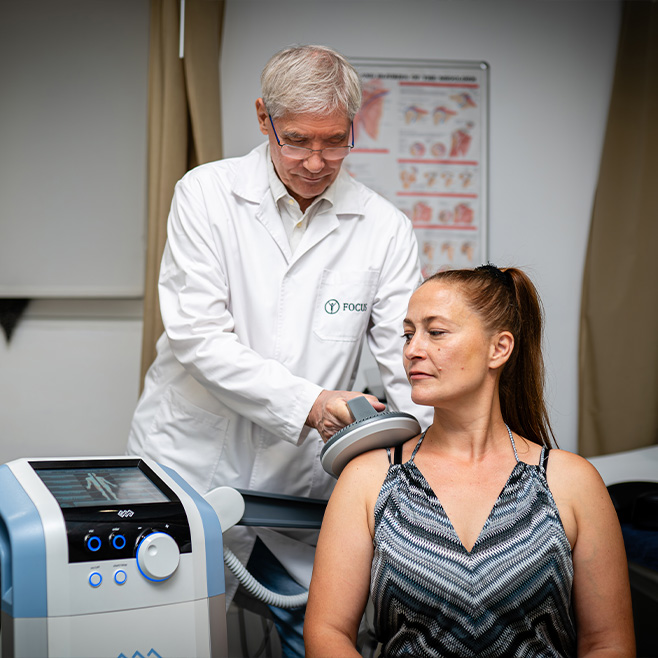
- Calcific tendinitis (shoulder calcifications): Radial and focused Shockwave therapy is applied to break down calcified deposits and stimulate angiogenesis, effectively eliminating the underlying cause of chronic inflammation.
- Frozen shoulder and adhesive capsulitis: Advanced TECAR therapy delivers deep diathermy to tissues, increasing the viscoelasticity of the joint capsule and restoring mobility without invasive procedures.
- Postoperative recovery after arthroscopy: Patients are guided through specific clinical recovery phases, using high-induction magnetotherapy to accelerate the healing of bone and soft tissue structures.
Our center is equipped with state-of-the-art systems that ensure safe and highly effective recovery. Instead of relying on invasive methods, Focus Fizikal utilizes targeted radiofrequency and biostimulative waves to stimulate the body’s self-regeneration. Kinesiotherapy protocols are introduced gradually and exclusively to support the stabilization of achieved results, ensuring each patient returns to their activities with a stronger and more resilient shoulder complex.
Our commitment is to provide top-tier medical care, where advanced technology and expert knowledge work exclusively to achieve your long-term recovery.
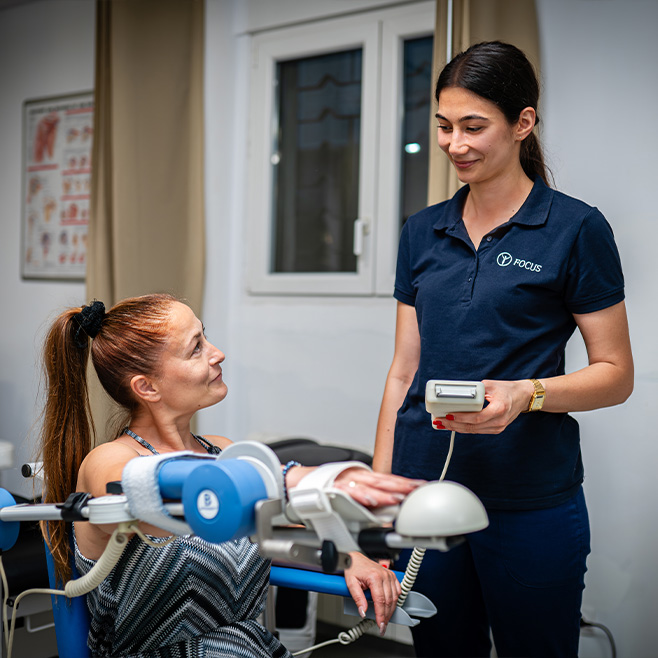
Gallery
Testimonials
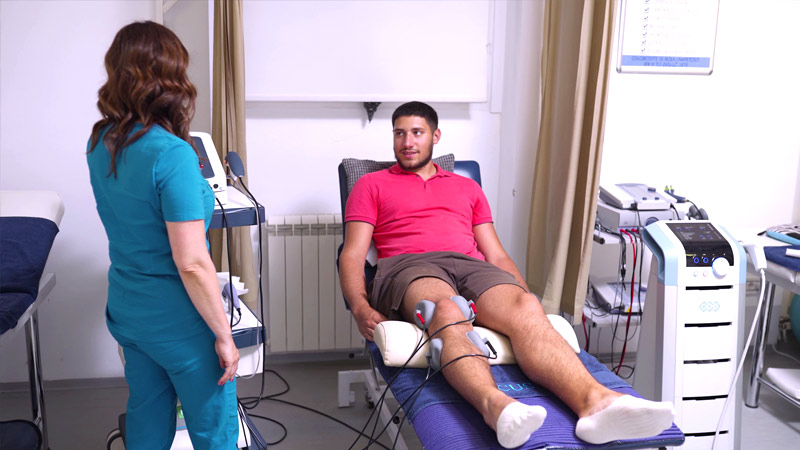

Successful treatment of patients
See the experiences of our satisfied patients who successfully recovered with the help of our physical therapy. Get acquainted with the testimonies of patients who faced various joint injuries, sports knee injuries, back injuries and similar problems, which we quickly, efficiently and successfully treated.
Aesthetic surgery
Why choose us?
Focus Fizikal is a leading private clinic for physical therapy in Belgrade. For more than 10 years, we have been providing high-quality services that enable quick recovery and healing of our patients.




Book online
For all our current and future patients, we have made it possible to schedule an appointment online.

Contact




pon-pet:
08:00 - 20:00subota:
08:00 - 15:00Links
Partners
Partners
Pratite nas



Contact
Mon-Fri:
08:00 - 20:00Saturday:
08:00 - 15:00