 +381 64 469 73 73
  Knee and leg pain
  Symptoms
  Causes
  Treatment
  FAQ
FAQ  Prices
  Gallery
  Testimonials
  Special offer
  Why choose us?
Cash
Through a current account
Focus Physical Therapy 100% guarantees fast and effective treatment.
SUPER DISCOUNT! 20% off all therapies in June! Call us 24/7!
Do not treat yourself based on information from the Internet!


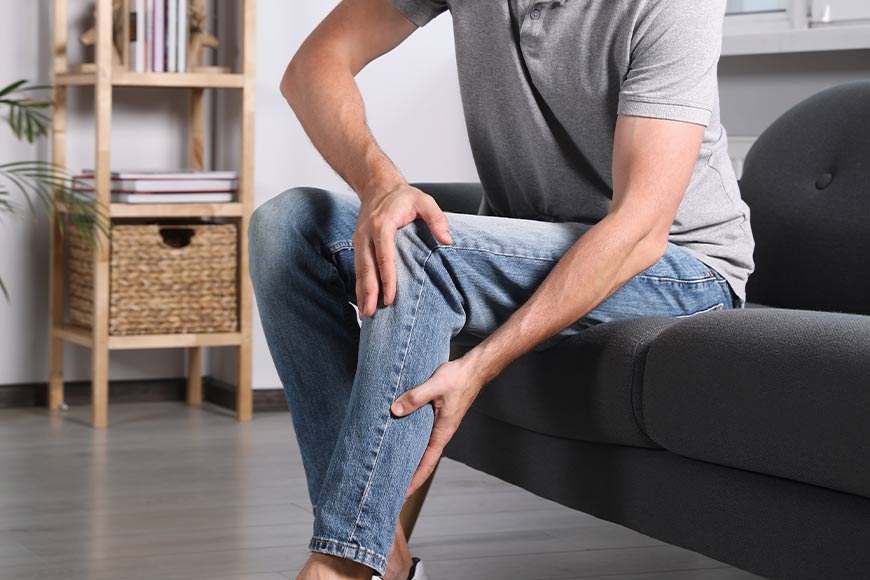
Pain that simultaneously affects the knees and radiates along the legs represents a complex condition indicating impaired static alignment and function of the entire kinetic chain of the lower extremities. The lower limbs function as a unified system in which the feet, knees, and hips work together to absorb ground impact and carry body weight. When primary stabilizers such as the knee joint lose their function due to wear or injury, a chain reaction occurs, leading to fatigue and pain in the muscles of the lower and upper legs.
The anatomy of this condition includes the knee joint with its ligamentous system, as well as large muscle groups such as the quadriceps, hamstrings, and gastrocnemius. Pain develops when chronic inflammation within the knee leads to a protective spasm of the surrounding muscles, which patients often describe as heaviness and pain throughout the legs. In individuals with vascular issues or metabolic disorders, leg pain may be further intensified by poor circulation, which slows the recovery of joint structures. Understanding the relationship between knee stability and leg muscle fatigue is crucial for determining the underlying cause of the symptoms. Timely physiotherapeutic evaluation helps prevent the development of chronic venous insufficiency and permanent damage to the joint cartilage.
The symptoms of pain in the knees and legs vary from a feeling of “swelling” and heaviness after a workday to sharp pain with every step. Patients often report that their legs become restless during the night, while the knees show signs of stiffness immediately after waking or after prolonged sitting. The clinical picture is specific because the pain often does not remain confined to the joint but spreads as a sensation of pressure down the calves or up the thighs.
The most common symptoms accompanying pain in the knees and legs include:
These signs are clear indicators that the lower extremities are under systemic overload requiring professional evaluation. Early recognition of symptoms allows the physiotherapist to unload critical structures and improve drainage throughout the legs.
The causes of combined pain in the knees and legs are most commonly associated with degenerative changes, foot posture disorders, and vascular factors. Factors such as obesity, inadequate footwear, or occupations that require prolonged standing directly contribute to fatigue of the soft tissues. Although the pain may initially appear in the knee, it often reflects underlying problems originating from the lumbar spine or the feet.
The main causes of pain in the knees and legs include:
Accurately determining whether the pain originates from mechanical joint damage or circulatory problems allows for the creation of an individualized treatment plan. Each of these causes requires a specific rehabilitation approach to achieve lasting pain relief.
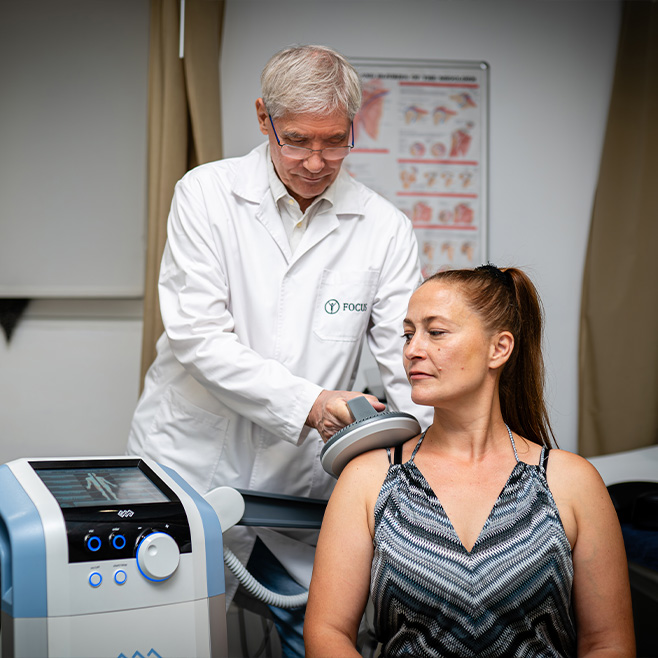
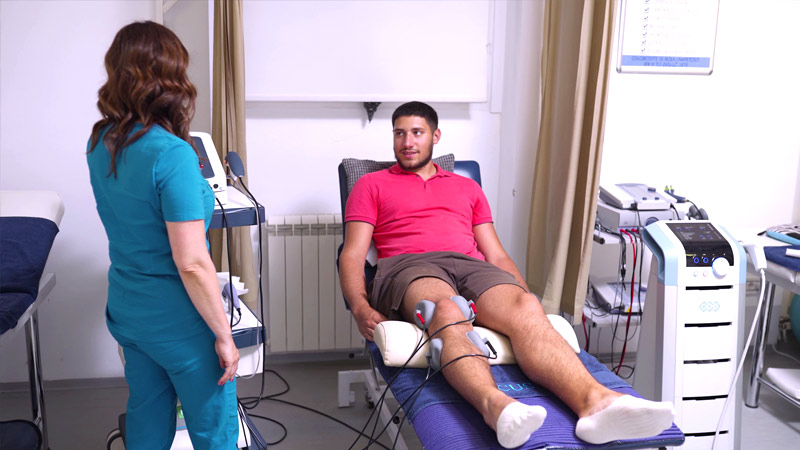
Our approach to treating combined knee and leg pain at the Physical Therapy Focus center is strictly individualized and aimed at eliminating the underlying causes—from chronic knee inflammation and swelling, to vascular insufficiency, impaired walking, and muscle weakness. We use advanced medical technology that provides deep tissue biostimulation, strengthens the “muscle pump,” and restores normal circulation, resulting in a feeling of lightness, stability, and unrestricted movement.
The rehabilitation process includes:
The comprehensive application of these methods at the Physical Therapy Focus center ensures high treatment efficiency even in chronic circulation and joint conditions. Through an individualized approach, natural leg strength is restored, and a safe return to daily activities without pain is enabled.
What can cause pain in the knees and legs?
Pain in the knees and legs can result from overuse, poor posture, muscle weakness, injuries, degenerative changes (such as osteoarthritis), spinal problems that radiate into the legs, or poor circulation. It often occurs after prolonged standing or sitting.
How does physical therapy help with knee and leg pain?
Physical therapy helps through strengthening exercises for the leg muscles and knee stability, stretching tight muscles, improving joint mobility, and reducing pain. It may also include electrotherapy, massage, therapeutic exercise, and education on proper movement and posture.
Can exercises reduce knee and leg pain?
Yes, properly selected exercises are one of the most important parts of treatment. Strengthening the thighs, hamstrings, and gluteal muscles reduces stress on the knees and legs, while stretching improves flexibility and reduces tension.
When is physical therapy needed for knee and leg pain?
Physical therapy is recommended when pain persists, recurs, limits movement, or affects daily activities. It is also important after knee or leg injuries and surgeries.
How can knee and leg pain be prevented?
Prevention includes regular exercise, strengthening leg muscles, maintaining a healthy body weight, avoiding overload and prolonged sitting or standing, and using proper movement techniques during physical activity.
Cash
Through a current account
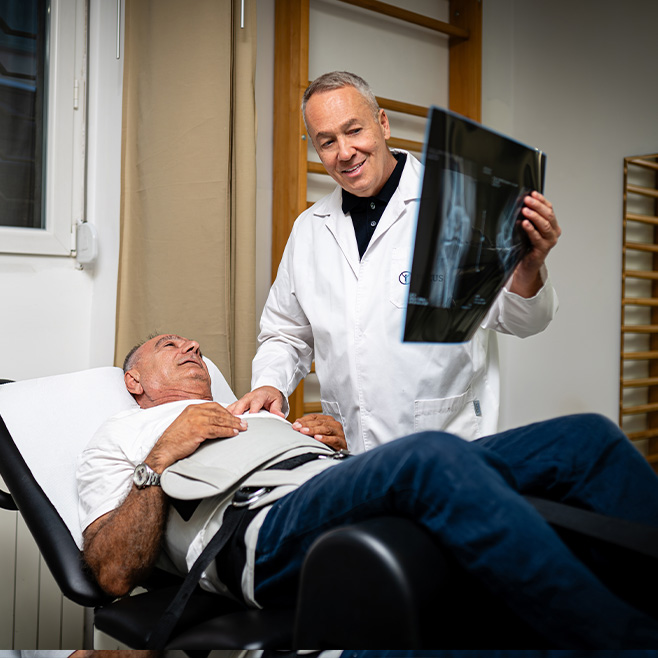
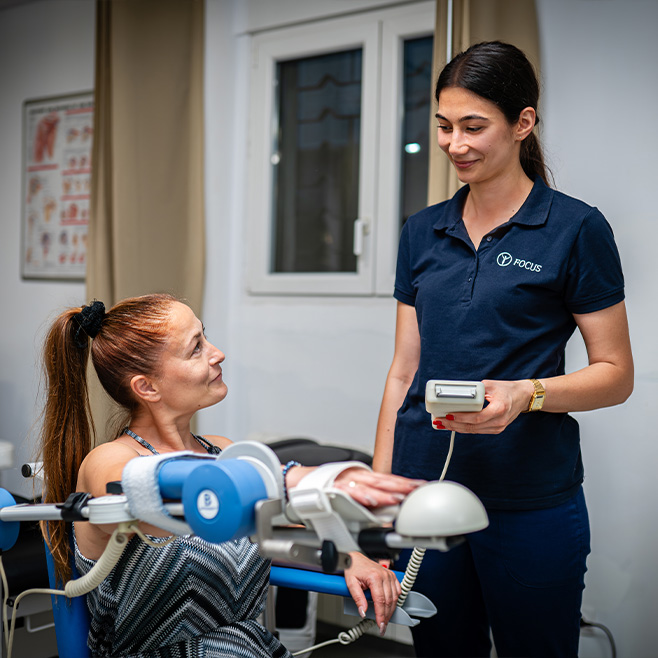

See the experiences of our satisfied patients who successfully recovered with the help of our physical therapy. Get acquainted with the testimonies of patients who faced various joint injuries, sports knee injuries, back injuries and similar problems, which we quickly, efficiently and successfully treated.
Aesthetic surgery
Focus Fizikal is a leading private clinic for physical therapy in Belgrade. For more than 10 years, we have been providing high-quality services that enable quick recovery and healing of our patients.




For all our current and future patients, we have made it possible to schedule an appointment online.



pon-pet:
08:00 - 20:00subota:
08:00 - 15:00


Mon-Fri:
08:00 - 20:00Saturday:
08:00 - 15:00