 +381 64 469 73 73
  Pain behind the knee when bending
  Symptoms
  Causes
  Treatment
  FAQ
FAQ  Prices
  Gallery
  Testimonials
  Special offer
  Why choose us?
Cash
Through a current account
Focus Physical Therapy 100% guarantees fast and effective treatment.
SUPER DISCOUNT! 20% off all therapies in June! Call us 24/7!
Do not treat yourself based on information from the Internet!


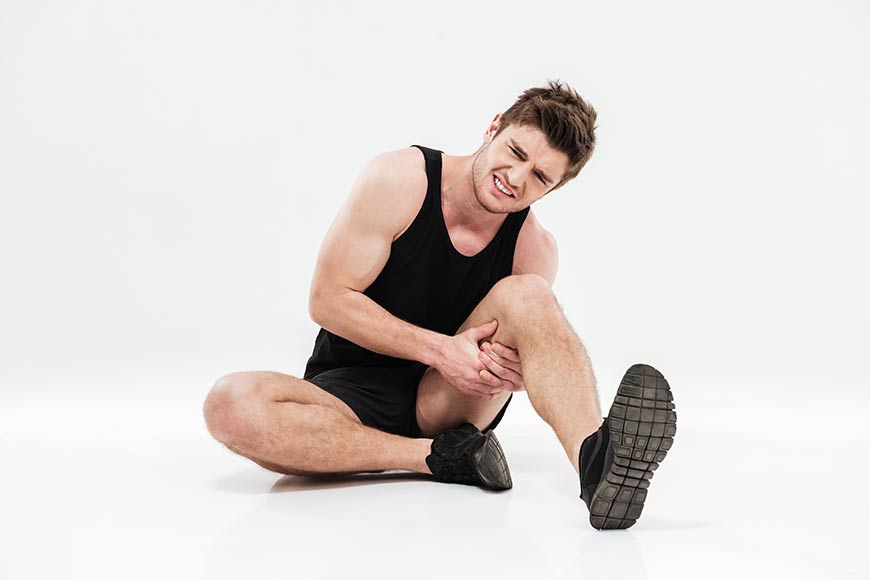
Pain that occurs exclusively or dominantly when bending the knee indicates soft tissue compression or tension in the structures located at the back of the joint. This region, known as the popliteal fossa, contains the joint capsule, the tendons of the hamstrings and calves, as well as vital neurovascular elements that must glide smoothly during movement. When the knee bends, pressure within the joint naturally increases, and any fluid accumulation or mechanical obstruction becomes painful and restrictive. Given that bending the knee is essential for basic actions like sitting, walking, or squatting, this problem significantly affects the quality of daily life.
Anatomically, bending the knee involves the shortening of the hamstrings and the stretching of anterior structures, requiring perfect harmony among all joint elements. If there is meniscus irritation or inflammation of the bursae, every degree of additional flexion increases pressure on these sensitive zones, causing sharp or dull pain. Understanding the biomechanical changes occurring in the posterior segment of the knee during movement is key to an accurate diagnosis. Timely intervention prevents functional limitations from turning into permanent joint stiffness and atrophy of the surrounding musculature.
Symptoms of pain behind the knee when bending vary from a sensation of mild tightness to a sharp, blocking pain that prevents a full range of motion. Patients often state that symptoms are most pronounced during specific activities, such as squatting, entering a car, or going down stairs, when pressure in the back of the joint is at its peak. The clinical picture is frequently accompanied by a subjective feeling that something is inside the knee, physically preventing it from closing completely.
The most common symptoms accompanying pain behind the knee when bending include:
Sharp pain deep in the popliteal fossa that occurs as soon as the knee passes a certain angle of flexion.
A sensation of fullness and pressure behind the knee resembling a tight balloon, especially after prolonged walking or activity.
Occasional clicking or popping in the back of the joint, followed by momentary pain and a sense of instability.
Swelling that becomes more noticeable when the leg is straightened, but causes the greatest discomfort when the leg is bent.
Pain radiating down into the calf, particularly during a deep squat or when rising from a low chair.
All these symptoms are clear indicators that the internal structures of the knee are under excessive strain, requiring professional diagnostic evaluation. Recognizing these signs at the very beginning allows for more effective application of therapeutic procedures and a faster return to normal functions.
Causes of pain behind the knee when bending are most often associated with pathological changes within the joint itself that lead to increased accumulation of joint fluid. Factors such as cartilage injuries, inflammatory processes in the tendons, or degenerative changes in the meniscus directly contribute to the reduction of free space in the back of the knee. Although the pain arises during movement, the cause often lies in chronic overstrain or previous traumas that were not adequately treated.
The primary causes of pain behind the knee when bending are:
Understanding these causes allows the physical therapist to create a targeted treatment plan that will eliminate the mechanical block and calm the inflammation. Each of these causes requires a specific rehabilitative approach to restore the patient's full and painless range of motion.
Treatment of pain behind the knee during bending at the Focus Physical Therapy Center is aimed at reducing internal pressure and restoring normal joint mechanics, while also addressing the underlying factors that limit movement. The therapeutic protocol combines modern devices that accelerate fluid resorption with manual techniques that release restricted structures and improve joint function. Successful rehabilitation involves not only eliminating current pain but also gradual strengthening of the muscles responsible for knee stability and proper movement control in daily and sports activities.
A modern rehabilitation approach includes the following phases:
Consistent adherence to the prescribed exercise program is essential for maintaining results and achieving long-term improvement in knee function during bending. This comprehensive approach enables patients to return to sports and daily activities without limitations or fear of pain recurrence.
What most commonly causes pain specifically during knee flexion?
The most frequent cause is a Baker's cyst. During flexion, intra-articular pressure increases, pushing fluid into the cyst and causing pain. Additionally, a tear in the posterior horn of the meniscus can trigger sharp pain at the end of the motion.
Why do I feel pain behind the knee only during deep squats?
This often indicates a spasm of the popliteus muscle or inflammation of the hamstring tendon attachments. The popliteus "unlocks" the knee for flexion; if it is overstrained, deep flexion causes a painful reaction deep in the popliteal fossa.
Which physical procedures fastest restore a full range of motion?
We achieve excellent results with TECAR therapy, which instantly reduces pressure and relaxes cramped muscles. High-power HILT laser provides strong anti-inflammatory effects, reducing joint swelling and facilitating pain-free flexion.
Is it safe to force knee flexion despite the pain?
Forced stretching is not recommended. If a Baker's cyst is present, extreme pressure could cause it to rupture. We use gentle manual mobilization techniques to release the joint safely.
How many treatments are needed to regain squatting ability?
Most patients see significant improvement in mobility within 3 to 5 sessions. The ultimate goal of kinesitherapy is to strengthen the quadriceps and stretch the hamstrings to permanently offload the back of the knee.
Cash
Through a current account
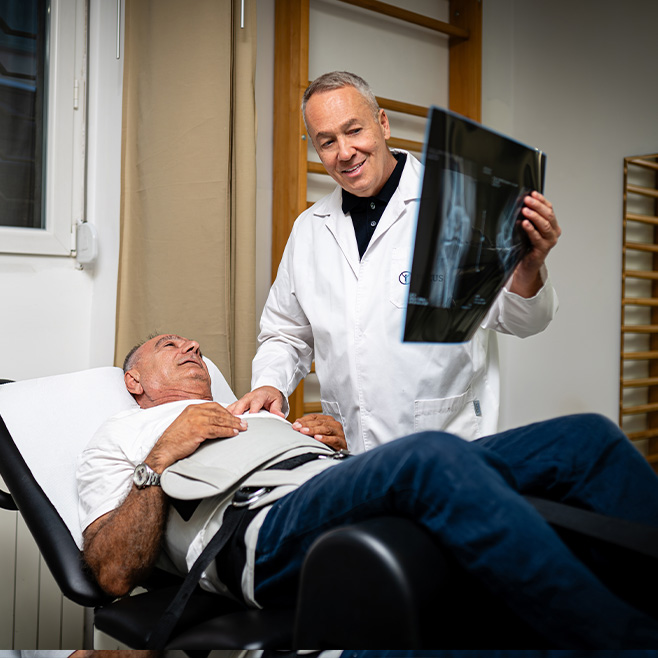
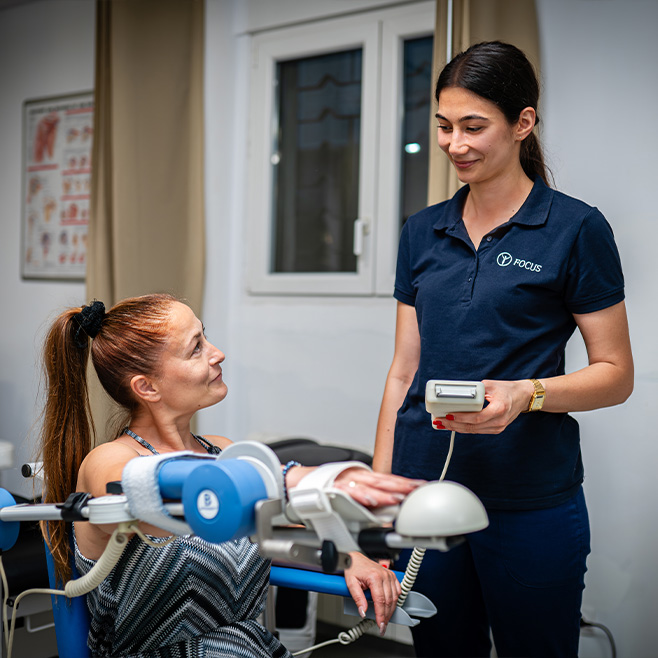
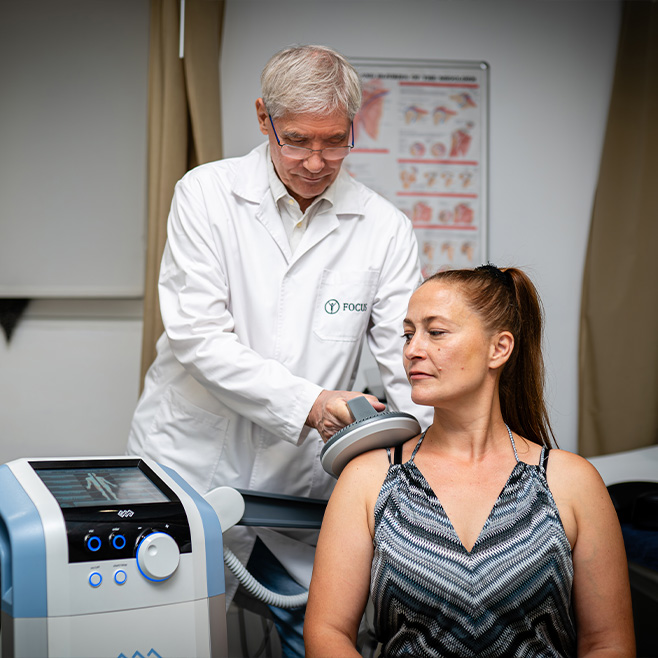
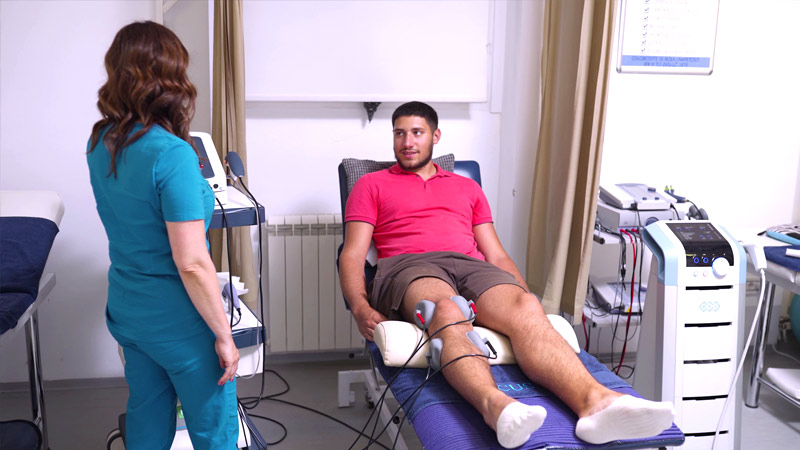

See the experiences of our satisfied patients who successfully recovered with the help of our physical therapy. Get acquainted with the testimonies of patients who faced various joint injuries, sports knee injuries, back injuries and similar problems, which we quickly, efficiently and successfully treated.
Aesthetic surgery
Focus Fizikal is a leading private clinic for physical therapy in Belgrade. For more than 10 years, we have been providing high-quality services that enable quick recovery and healing of our patients.




For all our current and future patients, we have made it possible to schedule an appointment online.



pon-pet:
08:00 - 20:00subota:
08:00 - 15:00


Mon-Fri:
08:00 - 20:00Saturday:
08:00 - 15:00