 +381 64 469 73 73
  Pain below the buttocks
  Symptoms
  Causes
  Treatment
  FAQ
FAQ  Prices
  Gallery
  Testimonials
  Special offer
  Why choose us?
Cash
Through a current account

Focus Physical Therapy 100% guarantees fast and effective treatment.
SUPER DISCOUNT! 20% off all therapies in June! Call us 24/7!
Do not treat yourself based on information from the Internet!


Pain localized in the region just below the buttocks, at the transition to the back of the thigh, is a common symptom that indicates overuse of the muscle-tendon structures or nerve compression in the area of the pelvic bone. This area is critical as it contains the attachment points of the hamstring muscles, as well as the passage of the largest nerve in the body—the sciatic nerve. Given that the pelvic region bears the greatest pressure during sitting and plays a primary role in movements such as walking uphill or running, the soft tissues in this area are highly susceptible to chronic inflammation.
Anatomically, pain below the buttocks often arises from irritation at the point where the tendons of the muscles attach to the ischial tuberosity. When the balance between the hip muscles and lower back is disrupted, these tendons become overstretched, leading to microtrauma and degenerative changes. Understanding the relationship between the deep gluteal muscles and leg tendons is crucial for determining the exact source of discomfort. A timely physical therapy diagnosis prevents local inflammation from spreading along the entire leg and causing more severe movement restrictions.
The symptomatology of pain below the buttocks varies from a dull sense of discomfort during sitting to sharp, shooting pain that occurs with sudden lunges or bending forward. Patients often report that the pain intensifies after prolonged periods of staying in a fixed position, while walking lightly may temporarily alleviate the symptoms. The clinical picture is specific as it directly reflects the level of irritation at the tendon attachment points or the level of pressure on the sciatic nerve.
The most common symptoms accompanying pain below the buttocks include:
All of these signs are clear indicators that the tissues in the pelvic region are undergoing mechanical stress, which requires professional evaluation and a change in activity regimen. Proper recognition of these early signals is crucial to preventing acute inflammation from progressing into chronic tendinopathy.
The causes of pain below the buttocks are most commonly associated with overuse syndromes in athletes or poor sitting ergonomics in individuals with a sedentary lifestyle. Factors such as the sudden introduction of sprint training, weakness in the core muscles, or tightness of the hamstring muscles further contribute to irritation in this sensitive region. Although the pain is felt locally, the root of the problem often lies in reduced mobility of the hip joint or issues in the lower back.
The main causes of pain below the buttocks are:
Accurately identifying the cause allows for the creation of a treatment plan that will permanently eliminate pain and correct muscle imbalances. Each of these causes requires a specific therapeutic approach to ensure full functional recovery.
Treatment of pain below the buttocks at the Focus Physical Therapy Center is based on the targeted reduction of mechanical tendon irritation and the relief of pressure on nerve structures. The therapeutic process begins with a phase of unloading the affected area, followed by carefully selected procedures that stimulate circulation, accelerate regeneration, and act on deep tissues of the gluteal region.
Successful rehabilitation does not only involve immediate pain relief, but also long-term hip stabilization, preventing recurrence and enabling a safe return to daily activities.
A modern rehabilitation approach includes the following phases:
Continuous implementation of individually tailored stretching and strengthening exercises is essential for the long-term health of muscles and joints. This comprehensive approach not only eliminates pain but also restores stability, confidence in movement, and overall quality of life without limitations.
What is Proximal Hamstring Tendinopathy?
It is the inflammation or degeneration of the hamstring tendons where they attach to the sit bone (ischial tuberosity). The pain is usually described as a deep, dull ache directly under the buttock that intensifies when sitting on hard surfaces, running uphill, or deep hip bending.
Can pain under the buttock be related to sciatica?
Yes. The sciatic nerve passes directly beneath the gluteal and hamstring muscles. If these muscles are overtightened (as in Piriformis syndrome), they can press on the nerve, causing pain that radiates down the leg, sometimes accompanied by numbness or tingling.
Which physical procedures fastest resolve pain while sitting?
Shockwave therapy is highly effective for chronic hamstring attachment issues as it stimulates tendon regeneration. Additionally, TECAR therapy deeply relaxes the cramped muscles of the gluteal region, instantly reducing pressure on the painful spot.
Why does this pain often recur despite rest?
Tendons in this area have specific blood supply patterns and are often compressed while sitting. Without strengthening the hip stabilizers and improving flexibility, the tendon remains weak and re-inflames as soon as normal activities resume.
Which exercises help with pain under the buttock?
In the acute phase, the focus is on light decompression and isometric exercises that do not irritate the tendon. Later, kinesitherapy is introduced to gradually strengthen the hamstrings, which is the only way to "train" the tendon to handle load again without pain.
Cash
Through a current account
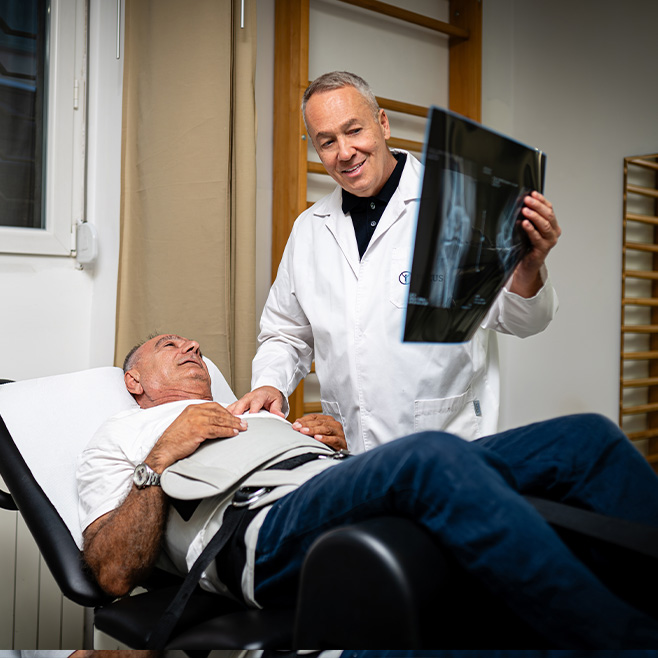
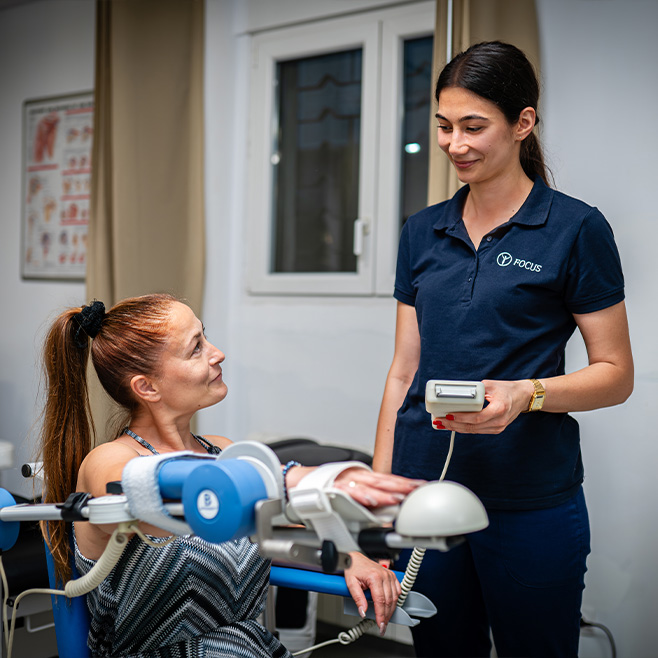
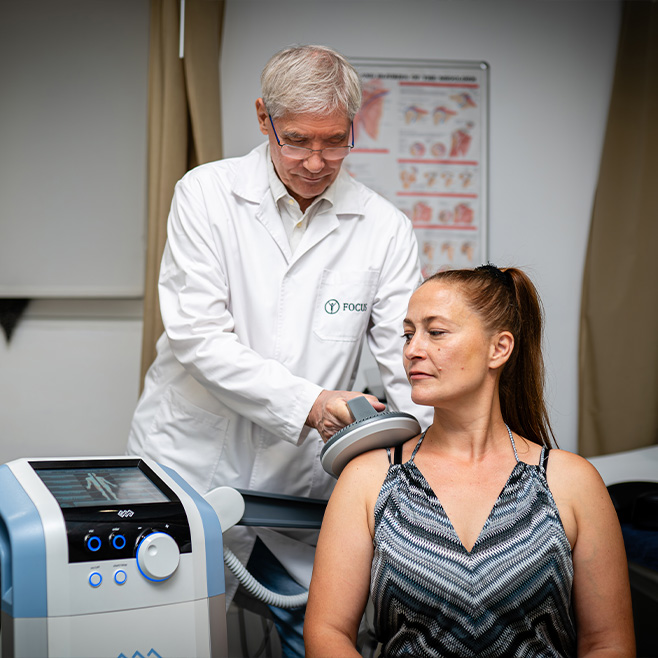
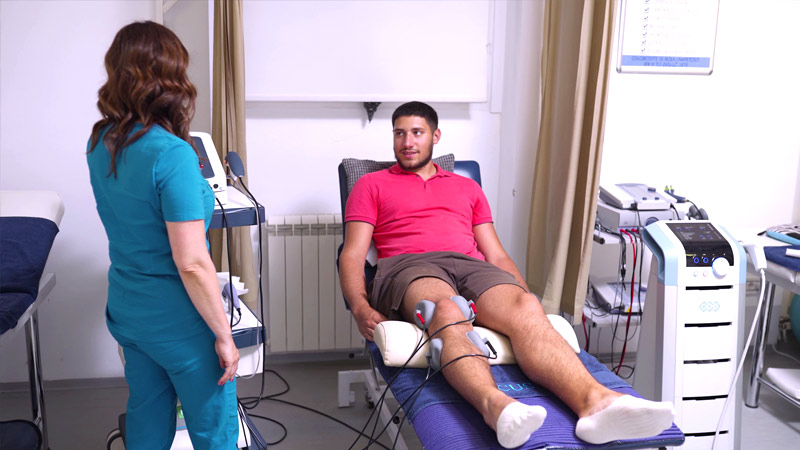

See the experiences of our satisfied patients who successfully recovered with the help of our physical therapy. Get acquainted with the testimonies of patients who faced various joint injuries, sports knee injuries, back injuries and similar problems, which we quickly, efficiently and successfully treated.
Aesthetic surgery
Focus Fizikal is a leading private clinic for physical therapy in Belgrade. For more than 10 years, we have been providing high-quality services that enable quick recovery and healing of our patients.




For all our current and future patients, we have made it possible to schedule an appointment online.



pon-pet:
08:00 - 20:00subota:
08:00 - 15:00


Mon-Fri:
08:00 - 20:00Saturday:
08:00 - 15:00