 +381 64 469 73 73
  Pain Below the knee on the front side
  Symptoms
  Causes
  Treatment
  FAQ
FAQ  Prices
  Gallery
  Testimonials
  Special offer
  Why choose us?
Cash
Through a current account
Focus Physical Therapy 100% guarantees fast and effective treatment.
SUPER DISCOUNT! 20% off all therapies in June! Call us 24/7!
Do not treat yourself based on information from the Internet!


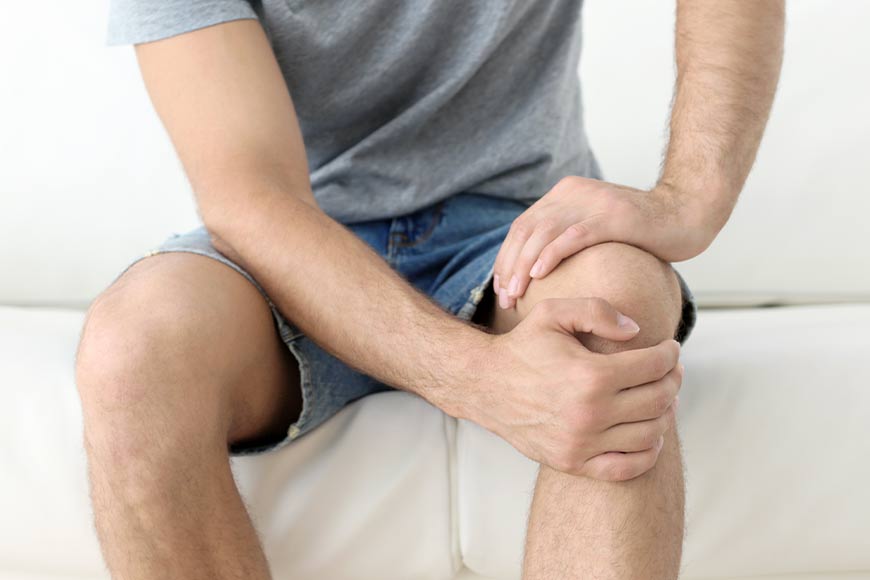
The pain localized to the front of the knee, just below the kneecap, is one of the most common reasons for visiting a physical therapist and usually points to overuse of the leg's extensor apparatus. This region includes the patellar tendon, fat pad (Hoffa's body), and the area where the tendon attaches to the shinbone, making this space particularly sensitive to mechanical stress. Given that the knee bears the weight of the entire body during movement, any biomechanical irregularities in the hip or foot can manifest as pain in this front segment.
Anatomically, the front of the knee is designed to endure significant dynamic loads, but repetitive movements such as squats, running, or prolonged kneeling can cause microtrauma to the soft tissues. When there is an imbalance between the muscles of the thigh, the kneecap stops gliding properly in its groove, leading to irritation and inflammation of the structures located just beneath it. Understanding these relationships within the joint is key to making an accurate diagnosis and ensuring successful recovery. Timely treatment of pain can prevent the development of chronic degenerative changes in the cartilage that could permanently limit the leg's functionality.
Symptoms of pain on the front side of the knee can range from mild discomfort while walking to sharp pain that makes descending stairs or sitting for extended periods difficult. Patients often report that the intensity of the symptoms changes depending on the level of physical activity, and the pain is frequently accompanied by audible phenomena within the joint itself. The clinical picture is specific, as it directly reflects the degree of irritation of the patellar tendon and surrounding bursae.
The most common symptoms that accompany pain below the knee on the front side include:
All of these signs are clear indicators that the front segment of the knee is experiencing a load that exceeds its current regenerative capacity. Proper documentation of these symptoms helps the physical therapist quickly identify the primary source of the problem.
The causes of pain below the knee on the front side are most commonly linked to overuse syndromes and poor biomechanics of the lower extremities. Factors such as a sudden increase in training intensity, inadequate sports footwear, or weakness in the hip muscles significantly contribute to the development of inflammatory processes in this area. Although the pain is felt locally, the root of the problem often lies in the improper distribution of forces acting on the knee during movement.
The main causes of pain on the front side of the knee include:
Understanding these causes allows for the creation of an individualized rehabilitation plan that will permanently eliminate pain and restore joint stability. Each of the listed causes requires a specific therapeutic approach to ensure long-term recovery.
Our approach to treating pain below the knee (anterior knee pain) at Focus Physical Therapy Center is strictly individualized and focused on the rapid elimination of the cause, from jumper's knee (patellar tendinitis) and inflammation of the fat pad (Hoffa’s syndrome), to patellar tracking disorders and chondromalacia patellae. We use the latest medical technology that alleviates patellar tendon stress, reduces infrapatellar pressure, and regenerates soft tissues, providing you with maximum stability with every step, readiness for any athletic effort, and pain-free movement.
Rehabilitation Process Includes:
Comprehensive application of these advanced methods at Focus Physical Therapy Center guarantees maximum effectiveness in treating even the most persistent anterior knee pain. With our personalized approach, you will regain full function in your leg and be able to return to your favorite activities with strength and pain-free movement.
What causes sharp pain directly below the kneecap?
The most common cause is patellar tendinitis, known as "Jumper's knee." This is an inflammation of the tendon connecting the patella to the shinbone. It typically occurs due to repetitive jumping, running, or sudden changes in direction, leading to microtraumas in the tendon fibers.
Why does a painful bony bump appear below the knee in young people?
In physically active adolescents, Osgood-Schlatter disease often occurs. This is an inflammation of the growth plate on the shinbone caused by the strong pull of the quadriceps tendon. With proper physical therapy, this condition is successfully managed.
Which procedures fastest resolve tendon inflammation below the knee?
Shockwave therapy is highly effective as it stimulates tendon tissue regeneration and breaks down potential calcifications. Additionally, we use the HILT laser to deeply reduce inflammation and pain, facilitating a quicker return to normal walking.
Can flat feet cause pain below the knee?
Yes. Fallen arches cause internal rotation of the lower leg, shifting the direction of forces acting on the knee. This creates asymmetrical loading on the tendon attachment below the kneecap, leading to chronic pain over time.
When is it safe to return to sports activities?
Returning to sports is advised only after tests confirm that the tendon has regained its elasticity and strength. Through kinesitherapy, patients perform specific eccentric exercises to strengthen the tendon apparatus, minimizing the risk of re-injury.
Cash
Through a current account
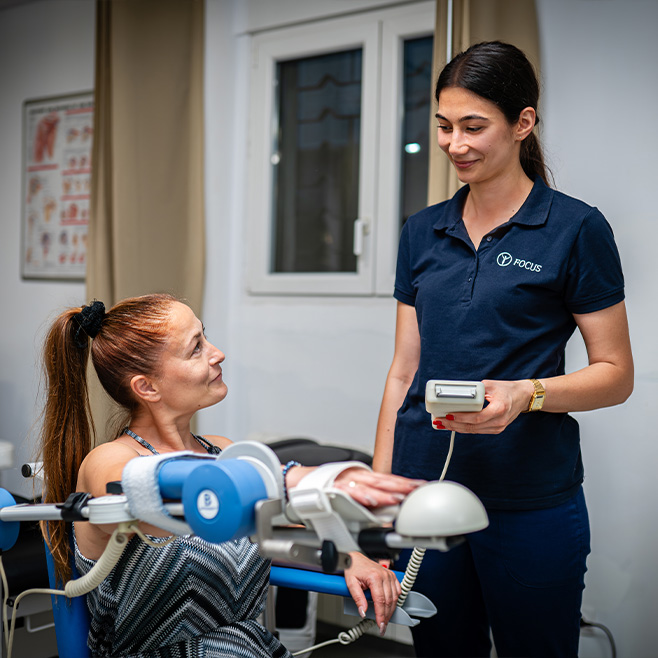
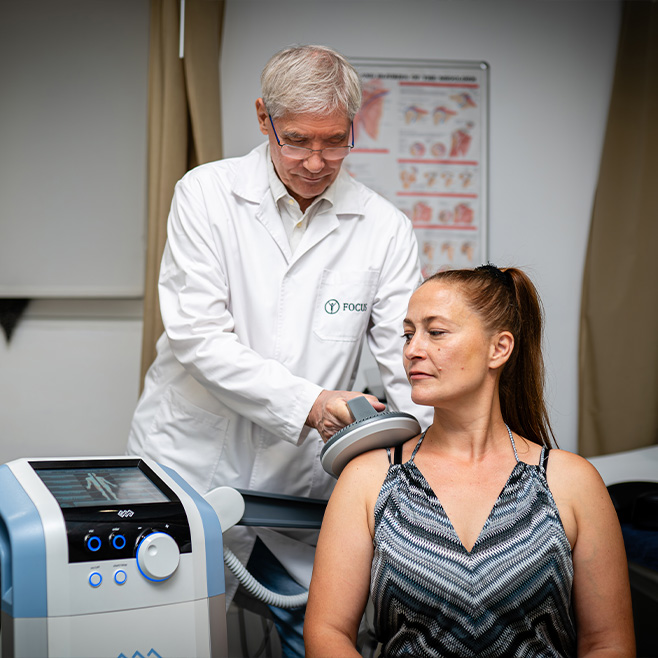
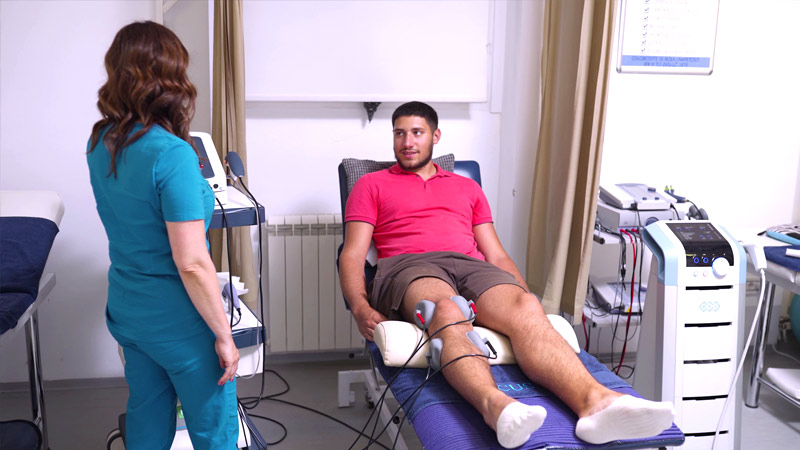

See the experiences of our satisfied patients who successfully recovered with the help of our physical therapy. Get acquainted with the testimonies of patients who faced various joint injuries, sports knee injuries, back injuries and similar problems, which we quickly, efficiently and successfully treated.
Aesthetic surgery
Focus Fizikal is a leading private clinic for physical therapy in Belgrade. For more than 10 years, we have been providing high-quality services that enable quick recovery and healing of our patients.




For all our current and future patients, we have made it possible to schedule an appointment online.



pon-pet:
08:00 - 20:00subota:
08:00 - 15:00


Mon-Fri:
08:00 - 20:00Saturday:
08:00 - 15:00