 +381 64 469 73 73
  Pain between the shoulder blades
  Symptoms
  Causes
  Treatment
  Prices
  Prices
  Gallery
  Testimonials
  Special offer
  Why choose us?
Cash
Through a current account

Focus Physical Therapy 100% guarantees fast and effective treatment.
SUPER DISCOUNT! 20% off all therapies in May! Call us 24/7!
Do not treat yourself based on information from the Internet!


Pain in the shoulder blade area most often occurs as a result of chronic muscle spasms in the muscles located between the inner edge of the scapula and the spine (primarily the rhomboids and the trapezius). The modern lifestyle, which involves hours spent in a forced position in front of computers or phones, leads to the "rounded shoulders" phenomenon. In this position, the muscles of the shoulder blades are constantly overstretched and tense, causing ischemia (poor blood flow) and the formation of painful "knots" known as myofascial trigger points.
At the Focus Physical Therapy center, we approach interscapular pain comprehensively. Often, this pain is not the primary problem but a compensation for stiffness in the cervical (neck) or thoracic (mid-back) spine. Our task is to use a detailed kinesitherapy exam to determine if the pain stems from the musculature itself, a disc in the neck radiating to the scapula, or a blockage in the thoracic vertebrae. Only when we precisely locate the source can we apply therapy that will permanently relax this part of the back.
Adequate treatment of the shoulder blades requires a combination of joint deblocking and deep muscle relaxation. Through individualized programs at Focus Physical Therapy, we focus on "opening" the chest and returning the shoulder blades to their natural anatomical position. This reduces pressure on nerve endings, eliminates the feeling of a "weight" on the back, and allows the patient ease of movement in the arms and head.
The clinical picture of interscapular pain can vary from a dull discomfort to a sharp, disabling pain that makes breathing difficult.
The most common symptoms include:
Dull, Constant Ache: A heavy sensation between the blades that intensifies toward the end of the workday.
Trigger Points: The presence of extremely painful "knots" that, when pressed, can provoke pain in the neck or down the arm.
Sharp Pain Upon Inhalation: Intense pain that occurs during a deep breath or a specific arm movement, often indicating a blockage in the rib-spine junction.
Stiffness When Turning the Head: A feeling that the tension in the shoulder blades prevents a full range of neck motion.
Burning and Tingling: A sensation of heat or "pins and needles" in the scapular area, often a sign of chronic irritation of the muscle fascia.
Limited Shoulder Mobility: A feeling that the shoulder blade does not "glide" properly over the ribs, creating resistance when lifting the arm above the head.
Interscapular pain rarely arises suddenly; it is usually the result of long-term neglect of proper posture and ergonomics.
Poor Posture (Upper Cross Syndrome): A forward-leaning head and shoulders rolled inward create immense stress on the scapular muscles.
Prolonged Computer Work: Static upper body positions without breaks lead to fatigue and shortening of the pectoral (chest) muscles, which automatically overloads the blades.
Cervical Syndrome: Issues with discs in the lower neck (C5-C7) very often project pain directly into the shoulder blade area.
Stress and Psychosomatic Factors: The scapular region is one of the first places where the body accumulates stress through involuntary shoulder shrugging and constant trapezius tension.
Sudden Heavy Lifting: An abrupt movement or lifting a heavy object can lead to muscle strain or minor rib joint dysfunction.
Degenerative Changes (Spondylosis): Wear and tear of the vertebrae in the thoracic spine that directly affects the surrounding muscles.
Treating pain between the shoulder blades requires patience and a combination of different methods, as symptoms often accumulate over the years. The first step in therapy is reducing mechanical load and deblocking the affected segments. This is achieved through ergonomic corrections and manual treatments that release tense muscle groups.
At the Focus Physical Therapy center, treatment is based on a personalized approach and the application of advanced technology:
Manual Therapy and Massage: Targeted breakdown of trigger points and mobilization of the thoracic spine and scapulae to restore full range of motion.
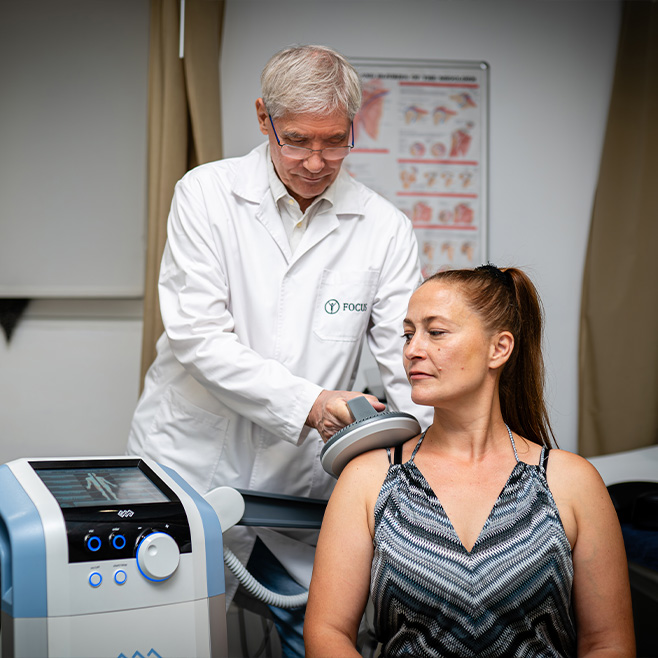
Tecar Therapy: Radiofrequency current that deeply heats the scapular region, immediately reducing spasms and improving microcirculation in ischemic muscles.
HILT Laser: A high-intensity laser that acts deeply on inflammatory processes and nerves, providing fast relief from sharp pain.
Shockwave Therapy: For chronic conditions where calcifications or extremely hard muscle fibers have formed, shockwaves are key for tissue regeneration.
Kinesitherapy (Exercises): A specific program of exercises to strengthen the scapular stabilizer muscles and stretch the anterior chain (chest muscles), which is the foundation of proper posture.
Kinesiotaping: The application of tapes that provide sensory support to the back, reminding the body to maintain a proper position and relieving the muscles between the blades.
The combination of these procedures at the Focus Physical Therapy center ensures not only the disappearance of pain but also a change in your lifestyle habits, preventing the recurrence of symptoms and ensuring the vitality of the upper body.
What causes shoulder pain?
Shoulder pain can be caused by muscle tension, injury, poor posture, arthritis, or damage to ligaments and tendons. Sometimes, it may also indicate heart or neck issues.
How can physical therapy help with shoulder pain?
Physical therapy helps strengthen shoulder muscles, improves mobility, reduces pain, and speeds up recovery after injuries or chronic issues. Therapists use exercises, manual therapy, and electrotherapy.
How long does it take for physical therapy to relieve shoulder pain?
Recovery time depends on the cause and severity of the problem. Mild issues may show improvement in 2–4 weeks, while chronic or injury-related pain may require 6–12 weeks or longer with regular exercises and therapy.
Is shoulder pain a serious sign and when should I see a physical therapist?
Most shoulder pain is not serious and can be relieved with physical therapy, but it’s important to see a therapist if the pain lasts more than two weeks, limits mobility, or is accompanied by swelling or arm weakness. Early intervention speeds recovery and reduces the risk of complications.
Can therapy replace medication?
Can reduce the need for medication, but in acute pain, medication may help.
Cash
Through a current account
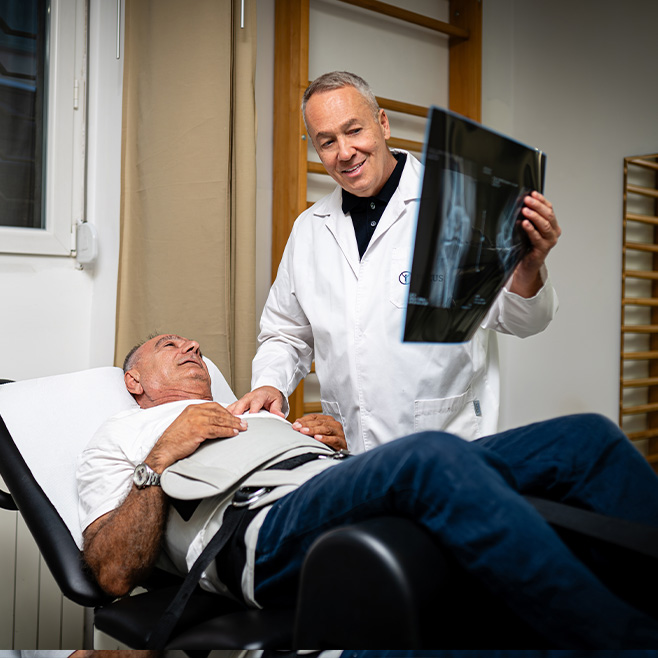
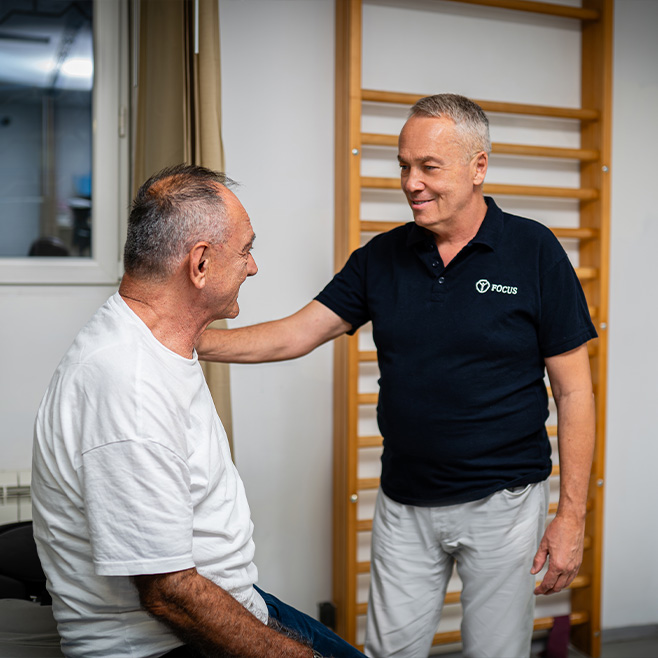
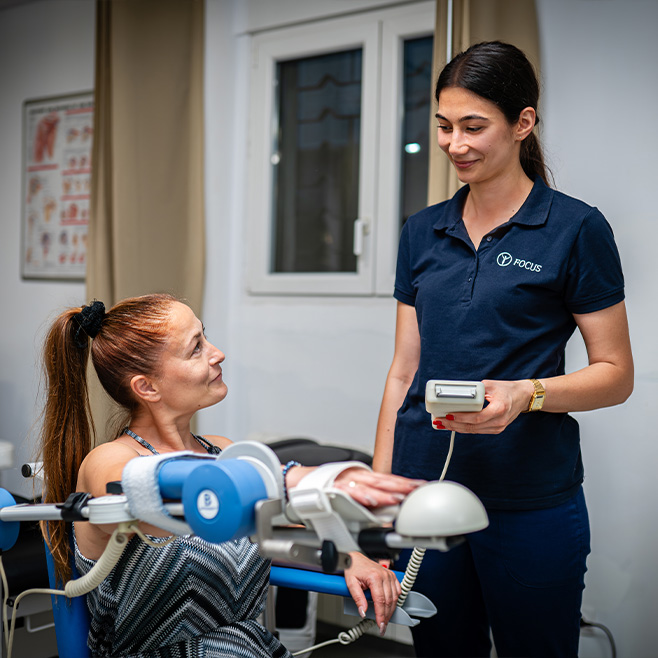
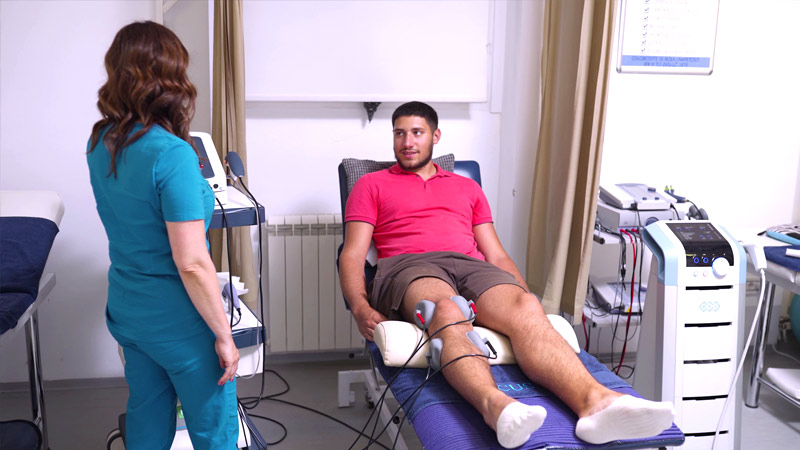

See the experiences of our satisfied patients who successfully recovered with the help of our physical therapy. Get acquainted with the testimonies of patients who faced various joint injuries, sports knee injuries, back injuries and similar problems, which we quickly, efficiently and successfully treated.
Aesthetic surgery
Focus Fizikal is a leading private clinic for physical therapy in Belgrade. For more than 10 years, we have been providing high-quality services that enable quick recovery and healing of our patients.




For all our current and future patients, we have made it possible to schedule an appointment online.



pon-pet:
08:00 - 20:00subota:
08:00 - 15:00


Mon-Fri:
08:00 - 20:00Saturday:
08:00 - 15:00