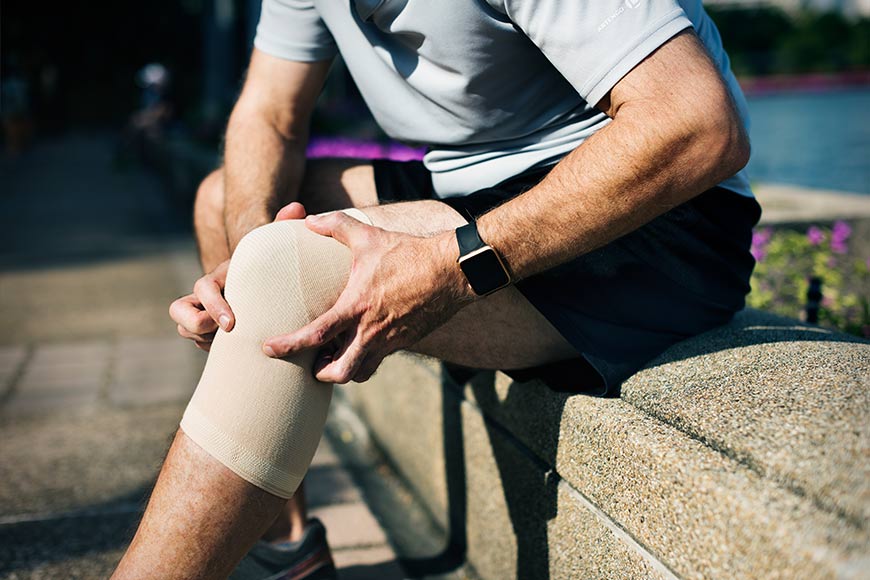
Pain in the back of the knee
Focus Physical Therapy 100% guarantees fast and effective treatment.
SUPER DISCOUNT! 20% off all therapies in June! Call us 24/7!
Do not treat yourself based on information from the Internet!
 +381 64 469 73 73
 -

- Treatment
- Pain in the back of the knee

 Pain at the back of the knee
  Symptoms
  Causes
  Treatment
  FAQ
FAQ  Prices
  Gallery
  Testimonials
  Special offer
  Why choose us?
 Pain at the back of the knee
Pain occurring on the back of the knee, in the region known as the popliteal fossa, often causes a sensation of tightness and pressure that limits the full mobility of the leg. This region is an anatomical crossroads through which the leg's largest blood vessels and nerves pass, protected by a layer of fatty tissue and the powerful tendons of the thigh and calf muscles. Unlike pain on the front of the knee, back pain is frequently associated with fluid accumulation within the joint or issues with the muscle attachments that control knee stability during walking.
The anatomy of the back of the knee includes the tendons of the hamstrings and the calf muscle (gastrocnemius), which attach to the bones in this area. Between these muscles lies the popliteal muscle, a key stabilizer that "unlocks" the knee at the start of flexion. Inside the fossa itself are small fluid-filled sacs called bursae that facilitate the gliding of tendons.
Any internal knee injury, such as meniscus damage, can lead to increased secretion of joint fluid that is pushed backward, creating a characteristic pressure. Understanding the connection between the internal structures of the joint and the soft tissues of the popliteal fossa is crucial for determining the cause of the discomfort. Timely physiotherapeutic diagnostics and the application of targeted procedures prevent chronic swelling and loss of leg function.
Symptoms
Symptoms of pain on the back of the knee vary from a dull sensation of fullness and pressure to sharp pain that occurs when attempting to fully straighten the leg. Patients often report the feeling of a "foreign body" behind the knee, which makes squatting or prolonged walking difficult. The clinical picture is specific because, in some cases, a soft protrusion can be felt that changes depending on the position of the leg.
The most common symptoms accompanying pain in the back of the knee include:
-
A sensation of tightness and pressure in the popliteal fossa that intensifies when the leg is fully extended.
-
The appearance of a visible or palpable swelling (cyst) on the back side, which may feel soft to the touch.
-
Pain radiating down the calf muscle or upward toward the back of the thigh during physical activity.
-
Limited range of motion, especially the inability to bring the heel toward the glutes when bending the leg.
-
Occasional numbness or weakness in the foot may indicate that the swelling is pressing on nerves in the popliteal fossa.
These signs are clear indicators that the posterior structures of the knee are under strain or pressure from excess joint fluid. Recognizing these symptoms in time allows the physiotherapist to apply drainage and offloading techniques, preventing the rupture of a cyst or permanent muscle shortening.
Causes
- Baker's cyst
- Posterior cruciate ligament injury
- Inflammation of the hamstring tendon
- Meniscus injury
The causes of pain at the back of the knee are most often secondary in nature, meaning that pain in the popliteal fossa is a consequence of another problem within the joint itself. Factors such as chronic cartilage inflammation, meniscus injuries, or sudden strains of the hamstring muscles directly contribute to the onset of discomfort. Although the pain is felt at the back, the cause is often hidden in mechanical damage to the front or middle part of the knee.
The primary causes of pain in the back of the knee include:
- Baker’s Cyst (Popliteal Cyst): An accumulation of joint fluid in the bursa behind the knee due to joint inflammation or injury.
- Hamstring Tendinitis: Inflammation of the tendons of the muscles that attach to the back of the knee, usually due to overexertion.
- Injury to the Posterior Horn of the Meniscus: Damage to the cartilage that causes localized pain deep in the posterior part of the joint.
- Popliteus Muscle Inflammation: Causes pain during the initial degrees of leg flexion or rotation of the lower leg.
- Vascular or Neurological Issues: Such as compression of the popliteal artery or irritation of the tibial nerve.
Precisely identifying the cause of the pressure allows for the creation of an individual treatment plan that will permanently eliminate the pain and the underlying cause of the swelling. Each of the mentioned causes requires a specific rehabilitation approach to achieve long-term relief and prevent recurrences.
Treatment
Treatment of pain at the back of the knee at the Focus Physical Therapy Center is focused on reducing intra-articular pressure and improving drainage of excess fluid through modern physical therapy procedures. The therapeutic protocol combines the use of technologies that reduce inflammation and swelling with manual techniques that restore elasticity to the hamstring tendons and surrounding soft tissues. Successful rehabilitation involves eliminating pain, reducing swelling, and addressing the underlying cause of fluid accumulation within the joint.
A modern rehabilitation approach includes the following phases:
- Detailed functional knee assessment: Evaluation of joint mobility, meniscus testing, and assessment of the integrity of soft tissues in the popliteal (back-of-knee) region.
- Physical therapy: Application of tecar therapy, high-intensity laser, and magnetotherapy to rapidly reduce swelling, inflammation, and pain.
- Manual therapy and lymphatic drainage: Techniques aimed at improving circulation, reducing pressure in the popliteal fossa, and accelerating fluid removal from the joint area.
- Kinesiotherapy and knee stabilization: Specific hamstring stretching exercises combined with strengthening of the quadriceps and knee stabilizer muscles to restore balance around the joint.
- Education and prevention: Guidance on protective positions, load management, and the use of kinesio tape to support drainage and reduce strain on posterior knee structures.
Continuous adherence to the recommended exercise program is essential for maintaining results and preventing recurrence of fluid accumulation (including Baker’s cyst). This comprehensive approach restores ease of movement and allows a return to daily activities without tightness or pain.
FAQ
What is a Baker's cyst and why does it occur?
A Baker's cyst is a buildup of joint fluid in a sac behind the knee, usually resulting from an internal joint issue like meniscus damage. It feels like a "ball" or pressure behind the knee that limits squatting or straightening the leg.
Can the pain behind the knee be muscular?
Yes. It is often a spasm of the popliteus muscle or inflammation of the hamstring/calf muscle attachments, which can project pain directly into the popliteal fossa.
Which physical procedures fastest reduce pressure behind the knee?
We achieve excellent results with TECAR therapy, which relaxes deep tissues and aids fluid drainage, and high-power HILT laser, which provides strong anti-inflammatory effects and rapid pain relief.
How to distinguish this pain from deep vein thrombosis (DVT)?
If pain is accompanied by sudden calf swelling, redness, and warmth, an urgent medical consultation is required. Muscle pain and cysts typically do not cause such skin changes.
Which exercises help with tightness behind the knee?
The focus is on gentle joint mobilization and hamstring stretches. For Baker's cysts, strengthening the quadriceps is vital to stabilize the joint and naturally reduce fluid production.
Prices
Gallery
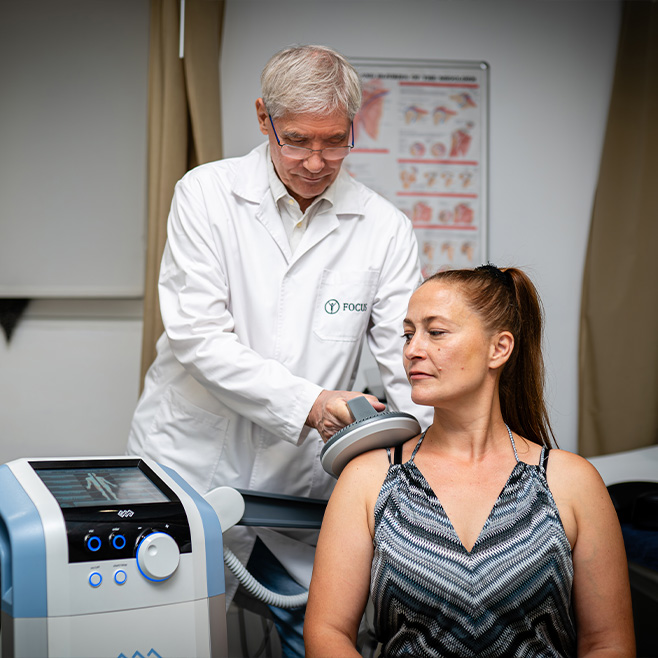
Testimonials
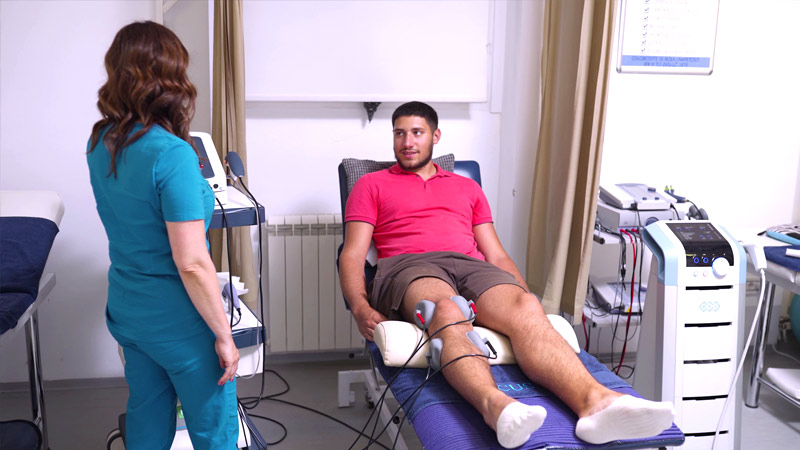

Successful treatment of patients
See the experiences of our satisfied patients who successfully recovered with the help of our physical therapy. Get acquainted with the testimonies of patients who faced various joint injuries, sports knee injuries, back injuries and similar problems, which we quickly, efficiently and successfully treated.
Special offer
Aesthetic surgery
Why choose us?
Focus Fizikal is a leading private clinic for physical therapy in Belgrade. For more than 10 years, we have been providing high-quality services that enable quick recovery and healing of our patients.




Book online
For all our current and future patients, we have made it possible to schedule an appointment online.

Contact




pon-pet:
08:00 - 20:00subota:
08:00 - 15:00Links
Partners
Partners
Pratite nas



Contact
Mon-Fri:
08:00 - 20:00Saturday:
08:00 - 15:00