 +381 64 469 73 73
  Pain in the back of the thigh
  Symptoms
  Causes
  Treatment
  FAQ
FAQ  Prices
  Gallery
  Treatment
  Special offer
  Why choose us?
Cash
Through a current account

Focus Physical Therapy 100% guarantees fast and effective treatment.
SUPER DISCOUNT! 20% off all therapies in June! Call us 24/7!
Do not treat yourself based on information from the Internet!


Pain occurring on the back of the thigh is one of the most common reasons for limited movement, as it directly affects the group of muscles responsible for walking, running, and standing up. This region is dominantly composed of three powerful muscles known as the hamstrings, which stretch from the sit bone (ischial tuberosity) all the way to below the knee. Due to their role in simultaneously controlling hip and knee movements, these muscles are under constant dynamic strain and are highly susceptible to shortening, especially in individuals who spend a lot of time in a seated position.
The anatomy of the back of the thigh also includes the sciatic nerve, the longest nerve in the body, which passes directly under or through the muscular structures of the gluteal region and descends down the thigh.
Any mechanical obstruction, such as an inflamed muscle or a problem in the lower back, can irritate this nerve and cause pain that patients often describe as an electric shock. In addition to muscle fibers, there are firm fasciae that wrap around the muscles and allow them to glide smoothly. Understanding the link between pelvic stability and hamstring elasticity is crucial for determining the cause of the discomfort. Timely physiotherapeutic diagnostics and manual therapy prevent the onset of chronic stiffness and muscle fiber ruptures.
Symptoms of pain in the back of the thigh vary from a dull, deep discomfort in the area of the sit bone to sharp, shooting pain that radiates down the entire leg. Patients often report that the pain intensifies when bending the torso forward with straight legs or during long car rides. The clinical picture is specific because, along with the pain, a sensation of tightness often occurs, preventing a full stride during fast walking.
The most common symptoms accompanying pain in the back of the thigh include:
These signs are clear indicators that the musculoskeletal apparatus or nerve structures of the posterior thigh are under strain that requires professional evaluation. Timely recognition of these symptoms allows a physiotherapist to precisely target the problematic region manually and prevent further radiation of pain toward the foot.
The causes of pain in the back of the thigh are most commonly associated with muscle overuse, but they may also result from nerve compression in the lumbar spine. Factors such as prolonged sitting, inadequate warm-up before sports activities, or leg length asymmetry directly contribute to the development of microtrauma. Although the pain is felt in the thigh, the underlying cause often lies in functional dysfunction of the sacroiliac joint or problems involving the intervertebral discs.
The main causes of pain in the back of the thigh include:
Accurately identifying the source of irritation allows for the development of an individualized treatment plan aimed at permanently relieving pressure on the posterior thigh and correcting biomechanical alignment. Each of the above conditions requires a specific rehabilitation approach to achieve long-term relief and optimal functional recovery.
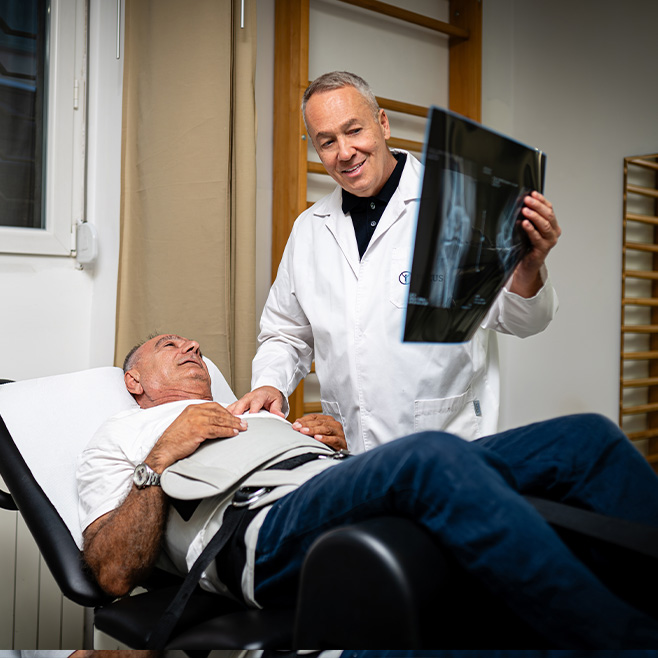
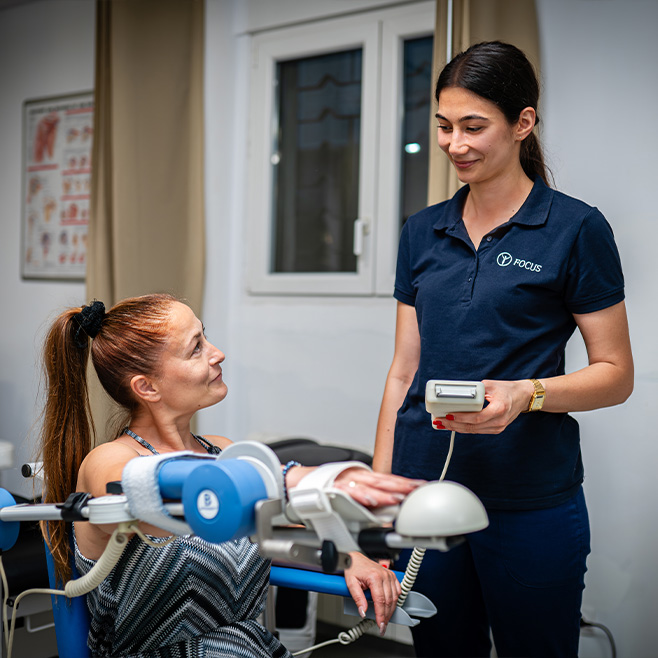
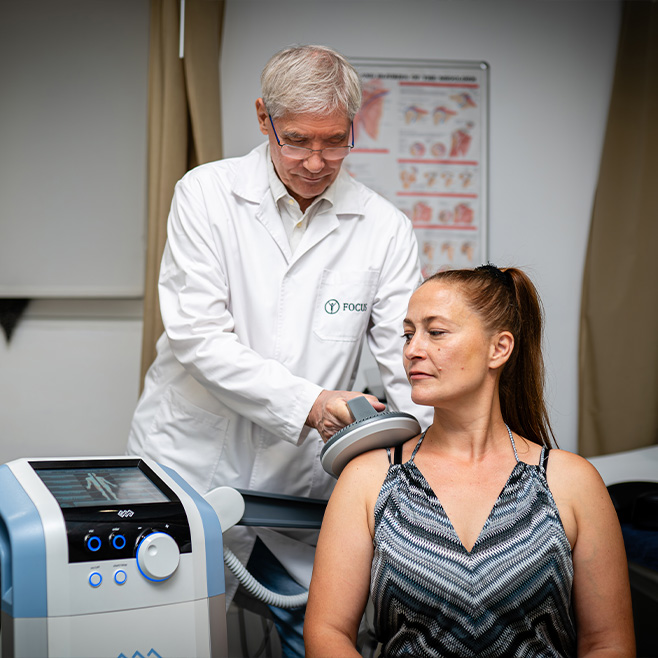
Treatment of pain in the back of the thigh at the Focus Physical Therapy Center is based on decompression methods and manual techniques that restore elasticity to soft tissues. The therapeutic protocol combines the use of advanced technology for deep reduction of inflammation and pain with targeted exercises that strengthen stabilizing muscles and improve functional balance of the lower limbs. Successful rehabilitation involves eliminating pain, relieving neural structures, and restoring proper balance between the anterior and posterior thigh muscle groups.
A modern rehabilitation approach includes the following phases:
Continuous adherence to the recommended exercise program is essential for maintaining results and preventing recurrence of muscle spasm. This comprehensive approach restores ease of movement and allows a return to daily activities without limitations.
What causes hamstring pain?
Most often, it is due to muscle strains or partial tears from sudden movements. The pain intensifies when flexing the knee against resistance or stretching the hip.
How to distinguish a muscle injury from sciatica?
Muscle pain is localized and tender to the touch. Sciatica involves shooting pain or tingling that travels down the entire leg, often starting from the lower back.
Which physical procedures fastest heal the hamstrings?
TECAR therapy for deep muscle relaxation, HILT laser for reducing inflammation, and Shockwave therapy for chronic attachment issues at the ischial tuberosity.
Why does hamstring pain often recur?
Recurrence is usually due to muscle tightness and poor hip mobility. Without proper rehab, the tissue forms inelastic scars. Also, weak glutes force the hamstrings to overwork, leading to chronic strain.
Which exercises are key to a permanent solution?
Kinesitherapy focuses on eccentric strengthening and hip mobilization. Strengthening the glutes and core offloads the hamstrings, making them more resilient.
Cash
Through a current account

Aesthetic surgery
Focus Fizikal is a leading private clinic for physical therapy in Belgrade. For more than 10 years, we have been providing high-quality services that enable quick recovery and healing of our patients.




For all our current and future patients, we have made it possible to schedule an appointment online.



pon-pet:
08:00 - 20:00subota:
08:00 - 15:00


Mon-Fri:
08:00 - 20:00Saturday:
08:00 - 15:00