 +381 64 469 73 73
  Pain in the tendons behind the knee
  Symptoms
  Causes
  Treatment
  FAQ
FAQ  Prices
  Gallery
  Testimonials
  Special offer
  Why choose us?
Cash
Through a current account

Focus Physical Therapy 100% guarantees fast and effective treatment.
SUPER DISCOUNT! 20% off all therapies in June! Call us 24/7!
Do not treat yourself based on information from the Internet!


Pain in the tendons at the back of the knee represents a common functional problem that directly affects the stability of the leg and the mechanics of walking. The back of the knee, known as the popliteal fossa, is where the strong tendons of the hamstring muscles and calf muscles attach. These tendons play a crucial role in controlling knee flexion and preventing excessive knee extension, which is why they are under constant dynamic load during daily and sports activities.
The anatomy of the tendons behind the knee includes the medial tendons (semitendinosus and semimembranosus) on the inner side and the lateral tendon (biceps femoris) on the outer side. Deep in the popliteal fossa, there is the tendon of the popliteal muscle, which is responsible for the initial phase of leg flexion. When chronic overuse or sudden movements occur, microtraumas can develop in these tendons, which the body fails to heal in time, leading to degenerative changes and thickening of the tendon tissue. Understanding the connection between thigh muscle tension and the load on the tendons behind the knee is crucial for determining the exact source of the pain. Timely physiotherapeutic diagnostics and targeted procedures prevent the development of permanent shortening and rupture of tendon fibers.
The symptoms of tendon pain behind the knee vary from a feeling of tightness and stiffness during the first steps in the morning to sharp stabbing pain when attempting to run or squat. Patients often report that the discomfort worsens with activities that require strong pushing off the foot from the ground or sudden braking movements. The clinical presentation is specific, as the pain is usually localized to the tendons themselves, which can be palpated as firm, painful bands behind the knee.
The most common symptoms associated with pain in the tendons behind the knee include:
These signs are clear indicators that the tendon structures at the back of the knee are under excessive load, which requires professional evaluation. Recognizing these symptoms early allows a physiotherapist to prevent the development of chronic tendinopathy, which significantly prolongs the recovery process.
The etiology of pain in the tendons behind the knee is most commonly associated with overuse syndromes due to sports activities or improper biomechanics of the entire lower extremity. Factors such as weakness of the front thigh muscles, poor flexibility of the hamstrings, or sudden changes in training intensity directly contribute to tendon damage. Although the pain is felt directly behind the knee, the underlying cause is often related to muscle imbalance between the hip and the knee.
The main causes of pain in the tendons behind the knee are:
Accurate identification of the location and extent of fiber damage allows for the creation of an individualized treatment plan that will permanently eliminate pain and restore elasticity to the tendons. Each of the mentioned causes requires a specific rehabilitation approach to achieve long-term relief.
At Focus Physical Therapy, our approach to treating tendon pain behind the knee is strictly individualized and focused on permanently eliminating the causes – from chronic inflammation due to overuse to micro-tears in the fibers. We use the most advanced medical technology that stimulates collagen regeneration and breaks down fibrous knots, restoring maximum strength, elasticity, and full functionality to your legs, all without pain.
The process includes:
The comprehensive application of these advanced methods guarantees maximum therapeutic effectiveness, even for the most persistent pain behind the knee. With the personalized approach at Focus Physical Therapy, you will regain the necessary strength and elasticity in your legs, with permanently improved movement mechanics.
Why do the tendons behind the knee hurt more after prolonged sitting?
Can pain in the tendons behind the knee be related to flat feet?
Yes, fallen arches cause internal rotation of the leg, which changes the angle at which the tendons pull on the bones of the lower leg. This irregular angle creates asymmetric loading on the tendons behind the knee, leading to faster fatigue and inflammation.
How long does it take to recover from tendonitis?
Recovery time depends on the degree of damage, but with adequate application of the shock wave, significant improvement is usually achieved after three to six weeks. It is important not to stop the rehabilitation process as soon as the pain disappears, because the tendon requires additional time to regain its full load-bearing capacity.
Is aggressive stretching allowed when the tendons behind the knee are inflamed?
In the acute phase of pain, aggressive stretching may further widen micro-tears in the tendon fibers and slow the healing process. Gentle mobilization and physical therapy that reduce muscle spasms should be done before starting a targeted stretching program.
When is pain in the tendons behind the knee a sign that an urgent ultrasound is necessary?
If the pain occurs suddenly with a sensation of a "pop" or "hit" at the back of the knee, accompanied by significant swelling or bruising, an ultrasound of the soft tissues is necessary. These signs could indicate a partial or complete tendon rupture, which requires immediate medical attention.
Cash
Through a current account
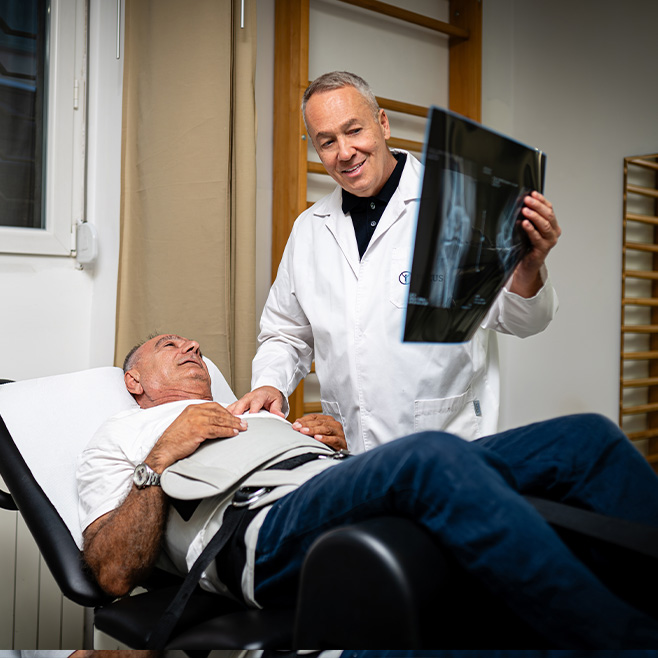
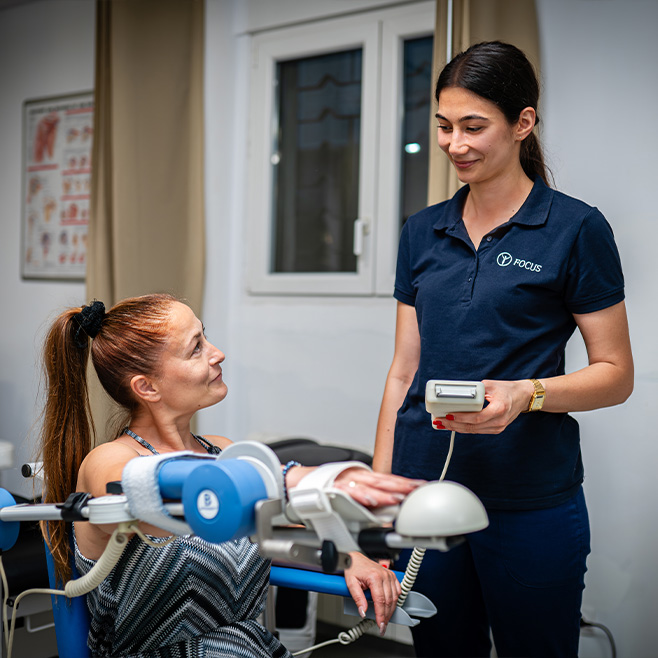
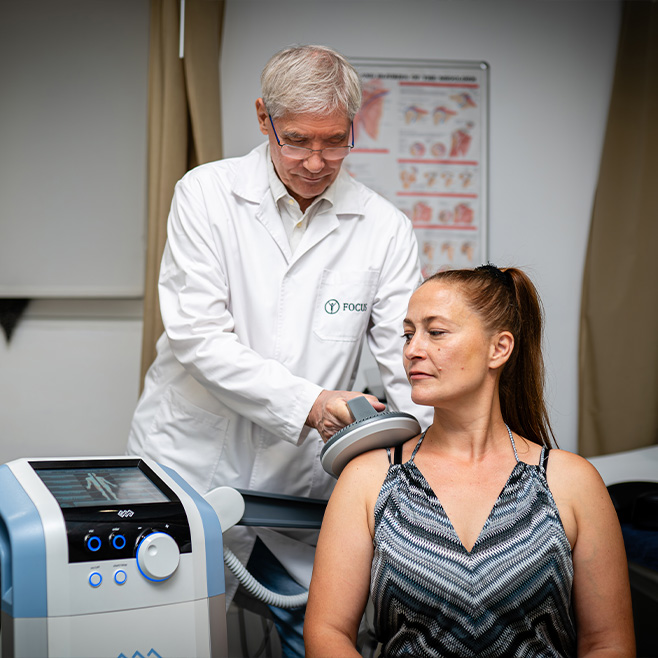
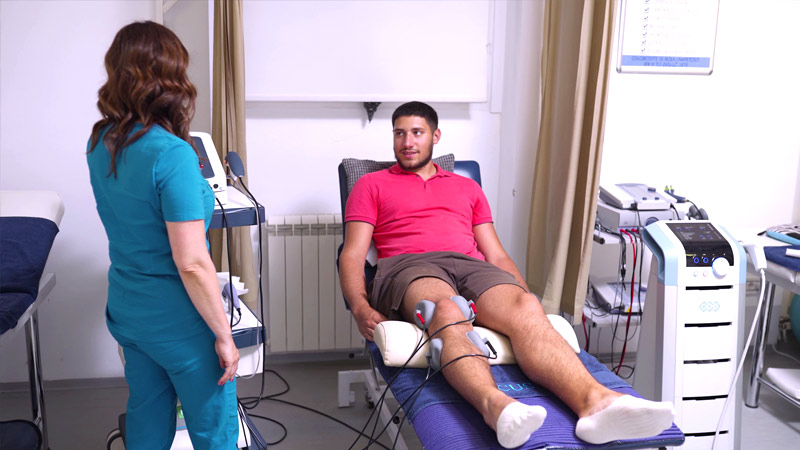

See the experiences of our satisfied patients who successfully recovered with the help of our physical therapy. Get acquainted with the testimonies of patients who faced various joint injuries, sports knee injuries, back injuries and similar problems, which we quickly, efficiently and successfully treated.
Aesthetic surgery
Focus Fizikal is a leading private clinic for physical therapy in Belgrade. For more than 10 years, we have been providing high-quality services that enable quick recovery and healing of our patients.




For all our current and future patients, we have made it possible to schedule an appointment online.



pon-pet:
08:00 - 20:00subota:
08:00 - 15:00


Mon-Fri:
08:00 - 20:00Saturday:
08:00 - 15:00