 +381 64 469 73 73
  Pain on the inside of the knee
  Symptoms
  Causes
  Treatment
  Prices
  Gallery
  Testimonials
  Special offer
  Why choose us?
Cash
Through a current account
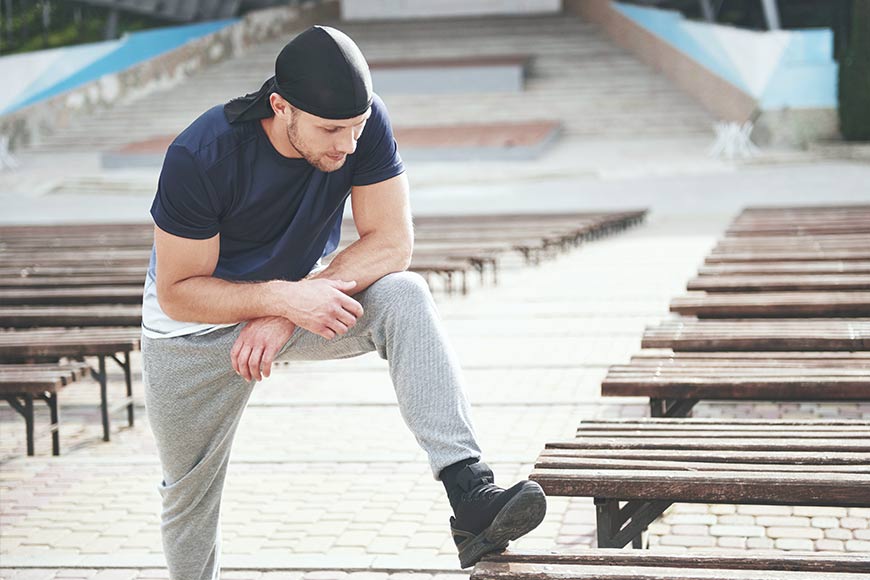
Focus Physical Therapy 100% guarantees fast and effective treatment.
SUPER DISCOUNT! 20% off all therapies in June! Call us 24/7!
Do not treat yourself based on information from the Internet!


Pain occurring on the inner (medial) side of the knee is one of the most common reasons for limited mobility, as this part of the joint bears the greatest pressure during walking and standing. The inner side of the knee is a biomechanically heavily loaded region containing key stabilizers that prevent the knee from "collapsing" inward. Any disruption of foot statics or weakness in the hip muscles directly reflects on the medial structures, leading to micro-traumas that, over time, develop into chronic inflammatory processes or degenerative cartilage damage.
The anatomy of the inner side of the knee includes the medial collateral ligament (MCL), the medial meniscus, and a specific group of tendons known as the "goose's foot" (pes anserinus). The medial meniscus is firmly attached to the ligament, making it less mobile and more prone to injury compared to the outer meniscus. Additionally, the joint capsule is located here, secreting the synovial fluid necessary for joint lubrication.
Understanding the link between foot positioning (pronation) and the load on the inner side of the knee is crucial for determining the cause of the discomfort. Timely physiotherapeutic diagnostics and manual therapy prevent the onset of permanent gonarthrosis and the need for invasive procedures.
Symptoms of pain on the inner side of the knee vary from a dull discomfort that occurs during long walks to a sharp stabbing sensation that prevents full straightening or bending of the leg. Patients often report that the pain intensifies when rising from a squat or during sleep when the knees touch each other. The clinical picture is specific because swelling often occurs on the inner side of the joint, creating a sense of pressure and tightness.
The most common symptoms accompanying pain on the inner side of the knee include:
Sharp pain on the inner joint line occurs during lower leg rotation or when putting weight on one leg.
Localized swelling and sensitivity to touch immediately below the joint line, in the area where the "goose's foot" tendons attach.
A sense of instability and the knee "buckling" inward while walking on uneven terrain.
Pain radiating down the inner side of the lower leg, often accompanied by a feeling of tightness in the hamstrings.
Mechanical locking or clicking inside the joint indicates possible damage to the medial meniscus.
These signs are clear indicators that the medial structures of the knee are under a load that requires professional evaluation and targeted therapy. Recognizing the symptoms in time allows the physiotherapist to apply decompression techniques and prevent further deterioration of the joint's soft tissues.
The causes of pain on the inner side of the knee are most commonly associated with mechanical stress due to improper leg alignment (X-legs/knock-knees) or sudden sports injuries. Factors such as flat feet (fallen arches), weakness in the inner thigh muscles, or sudden changes in direction directly contribute to damage of the medial ligament. Although the pain is felt on the inner side of the knee, the cause is often hidden in poor movement control at the hip or ankle.
The primary causes of pain on the inner side of the knee are:
Medial Collateral Ligament (MCL) injury, which occurs due to sudden stretching or a force pushing the knee inward.
Medial meniscus lesion, damage to the cartilaginous shock absorber that causes pain during squatting and rotation.
Pes anserinus tendovaginitis, inflammation of the tendons of three muscles that attach to the inner side of the lower leg, just below the knee.
Medial gonarthrosis, wear and tear of the cartilage in the inner part of the joint, leading to bone-on-bone contact and chronic pain.
Plica syndrome is irritation of an embryonic remnant of the joint membrane located on the inner side of the kneecap.
Precisely identifying the cause of irritation allows for the creation of an individual treatment plan that will permanently free the inner side of the knee from pain and restore its stability. Each of these causes requires a specific rehabilitation approach to achieve long-term relief.
Treatment of pain on the inner side of the knee at the Focus Physical Therapy Center is aimed at reducing inflammation of tendons and ligament structures while simultaneously correcting gait biomechanics and unloading the medial compartment of the joint. The therapeutic protocol combines the use of advanced technology for cartilage and soft tissue regeneration with manual techniques that improve the elasticity and function of medial knee structures. Successful rehabilitation involves eliminating pain, stabilizing the joint, and strengthening the muscles that maintain proper knee alignment during movement and load.
A modern rehabilitation approach includes the following phases:
Continuous adherence to the recommended exercise program is essential for maintaining results and preventing recurrence of pain. This comprehensive approach restores confidence in every step and allows a return to daily activities without limitations.
Cash
Through a current account
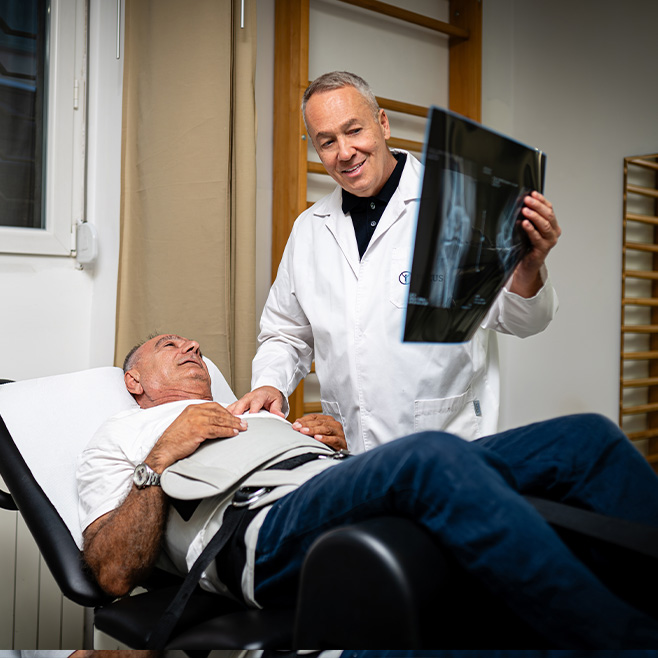
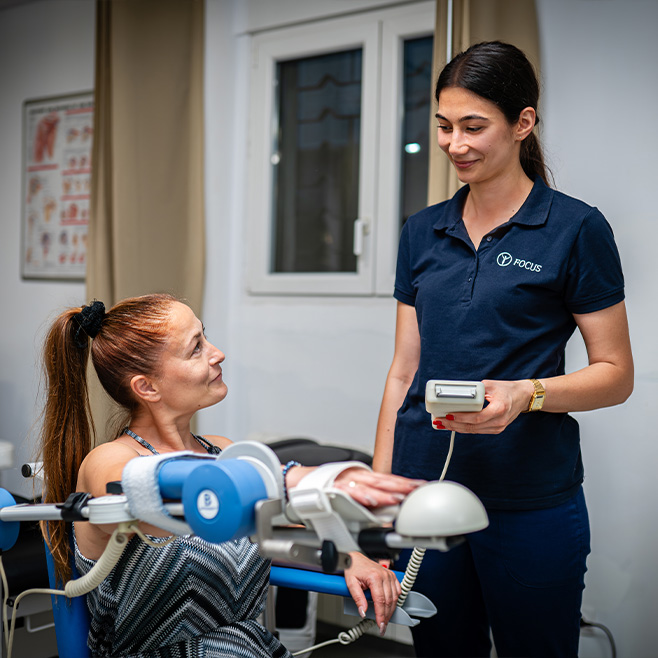
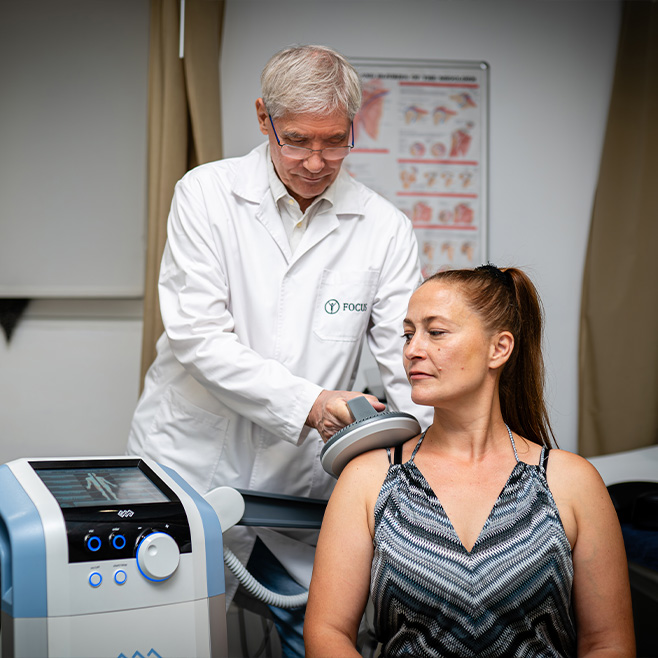
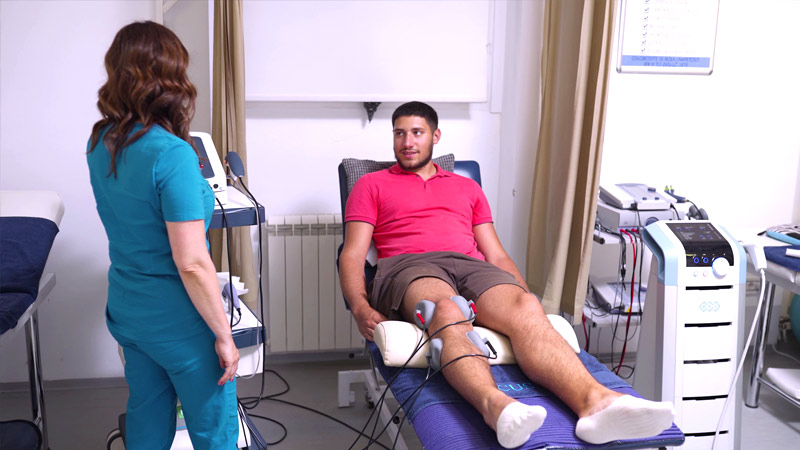

See the experiences of our satisfied patients who successfully recovered with the help of our physical therapy. Get acquainted with the testimonies of patients who faced various joint injuries, sports knee injuries, back injuries and similar problems, which we quickly, efficiently and successfully treated.
Aesthetic surgery
Focus Fizikal is a leading private clinic for physical therapy in Belgrade. For more than 10 years, we have been providing high-quality services that enable quick recovery and healing of our patients.




For all our current and future patients, we have made it possible to schedule an appointment online.



pon-pet:
08:00 - 20:00subota:
08:00 - 15:00


Mon-Fri:
08:00 - 20:00Saturday:
08:00 - 15:00