Sacral spine pain, physical therapy: Focus Physical✓

Physical therapy Belgrade | Sacral spine pain

Sacral spine pain

Sacral spine pain, Belgrade. TOP PRICE✔ Treatment of sternum, sacroiliac joint, sciatica and pelvis✔ Tecar, HILT laser, manual therapy and exercises✔

Focus Physical Therapy 100% guarantees fast and effective treatment.

SUPER DISCOUNT! 20% off all therapies in June! Call us 24/7!

Do not treat yourself based on information from the Internet!

  • First Facility
  • First Facility
  • Treatment
  • First Facility
  • Sacral spine pain

Sacral spine pain

The sacrum is a large triangular bone composed of five fused vertebrae, located at the base of the spine. It is firmly connected to the pelvic bones through the left and right sacroiliac (SI) joints, forming a stable pelvic ring. Nerve roots that contribute to the formation of the sciatic nerve pass through openings in the sacrum and are responsible for the innervation of the legs. When blockage or hypermobility (excessive movement) occurs in the SI joints, or when pressure is transferred from the upper lumbar segments, the surrounding ligaments and muscles enter a strong protective spasm, resulting in chronic pain.

At the Focus Physical Therapy Center, we approach pain in the sacral region through a detailed biomechanical assessment of the pelvis and lower extremities. The key challenge in managing this condition is accurately determining whether the pain originates from the sacrum itself, the adjacent sacroiliac joints, or from a herniated disc at the L5-S1 level that refers pain downward. Our primary goal is to identify the exact source of dysfunction through specific clinical tests (such as the Patrick/FABER test or the Gaenslen test for sacroiliac joint dysfunction) and establish the foundation for targeted and safe treatment.

Effective rehabilitation of sacral pain syndrome requires both the reduction of local inflammation and the correction of the biomechanics of the entire pelvic ring. Through individualized treatment programs at the Focus Physical Therapy Center, we successfully address sacroiliac joint dysfunction, lumbosacral strain, and piriformis syndrome. By combining advanced physical therapy technologies with specialized manual techniques, we help patients overcome deep, restrictive pain and restore stability during walking and standing.


Symptoms

The clinical presentation of sacral pain syndrome is characterized by deep, dull, or sharp pain at the very base of the spine, which can change significantly depending on body position and the degree of mechanical load. At the Focus Physical Therapy Center, we carefully analyze the behavior of the pain in order to accurately identify the affected structure.

The most common symptoms include:

  • Localized pain in the sacrum: A dull, constant pressure at the base of the spine that worsens with prolonged sitting on hard surfaces, lying on the back, or direct pressure on the sacral area.
  • Unilateral pain above the back of the pelvis: Pain located slightly to the left or right of the sacrum, directly over the sacroiliac joint, which may radiate into the gluteal region (buttock).
  • Pain radiating down the back of the thigh: Sharp pain that originates in the sacral region and extends through the hip and the back of the thigh, but usually does not travel below the knee, which helps distinguish it from classic sciatica.
  • Pain during changes in body position: Significant discomfort and sharp pain at the base of the spine when standing up from a deep chair, getting out of a car, or turning from side to side in bed.
  • Difficulty standing on one leg: The patient experiences instability and sharp pelvic pain when attempting to shift body weight onto one leg, such as while climbing stairs or putting on shoes.
  • Stiffness in the lumbosacral and pelvic region: A pronounced feeling of tightness and restriction in the lower back upon waking, often requiring gentle movement and walking to reduce discomfort.

At the Focus Physical Therapy Center, early recognition of these signs is a key step toward successful treatment, as it allows timely intervention to prevent acute inflammation from progressing into chronic tissue damage or permanent loss of joint function.

Causes

  • Sacroiliac (SI) Joint Dysfunction
  • Lumbosacral Strain
  • L5-S1 Disc Herniation
  • Piriformis Syndrome  

The onset of pain in the sacral region is rarely the result of an isolated injury to the sacrum itself. Much more often, it is caused by pelvic asymmetry, postural imbalances, or compensatory mechanisms related to problems in the hip or lumbar spine. At our center, we analyze the entire kinetic chain to identify the primary source of mechanical overload.

The main causes of sacral pain include:

  • Sacroiliac joint dysfunction and blockage: Mechanical restriction or reduced mobility of the joint surfaces between the sacrum and the iliac bone, leading to inflammation of the strong surrounding ligaments.
  • Lumbosacral disc herniation (L5-S1): Degeneration and damage of the intervertebral disc at the junction of the lumbar and sacral spine, where disc material compresses the nerve roots that pass directly in front of the sacrum.
  • Piriformis syndrome: Spasm of the deep gluteal muscle (piriformis), which attaches directly to the sacrum. Its tightness can pull the sacrum out of alignment and may also compress the sciatic nerve.
  • Pregnancy and the postpartum period: Under the influence of the hormone relaxin, the pelvic ligaments become more lax to facilitate childbirth. This creates temporary instability of the sacrum and increased stress on the sacroiliac joints.
  • Leg length discrepancy and scoliosis: An anatomically or functionally shorter leg causes the pelvis to tilt to one side, resulting in uneven and excessive loading of the sacrum during walking.
  • Cumulative microtrauma from prolonged sitting: Spending long hours sitting in a non-physiological position with the pelvis tilted backward causes body weight to be transferred directly onto the sacrum and coccyx rather than being supported by the sitting bones.

Treatment

Treatment and physical therapy for sacral spine pain require patience and a combination of different methods, as symptoms do not disappear overnight. The first step in treatment is eliminating the factors that mechanically aggravate the pain. This includes avoiding prolonged sitting, carrying loads asymmetrically on one side of the body, and sleeping on the stomach. During the acute phase, accompanied by sharp pain, cryotherapy (ice application) for 10–15 minutes over the painful area is recommended to reduce inflammation. In the subacute phase, moderate dry heat may be used to relax spasms in the gluteal muscles.

At the Focus Physical Therapy Center, treatment of sacral spine pain is carried out through individualized and precise protocols designed to safely relieve pain and restore long-term balance to the pelvic ring:

  • Functional diagnostics and postural analysis: Performance of specific manual tests to assess sacroiliac joint mobility, measurement of lower limb length, and evaluation of pelvic symmetry before treatment begins.
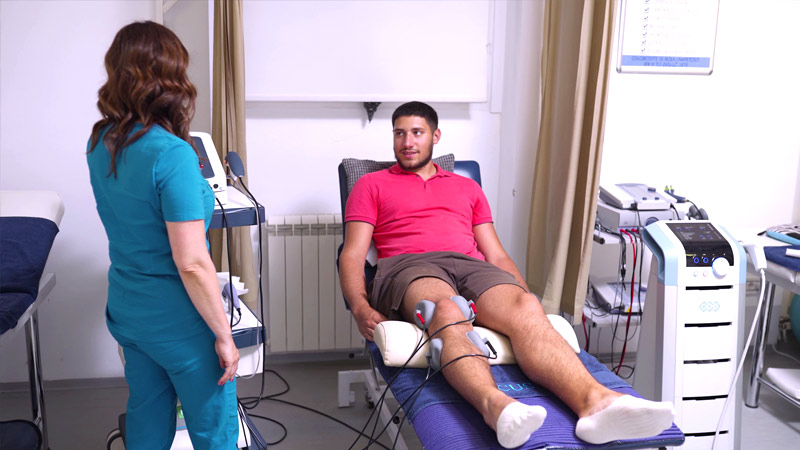
  • TECAR therapy for the sacral region: Application of highly effective radiofrequency energy. TECAR therapy deeply heats the strong pelvic ligaments and gluteal muscle attachments, rapidly reduces painful muscle spasms, improves local microcirculation, and accelerates tissue healing.
  • HILT Laser Therapy (High-Intensity Laser Therapy): Thanks to its high power and deep penetration, HILT laser delivers energy directly to the deep structures of the sacroiliac joint and lumbosacral junction. It effectively reduces inflammation and provides rapid relief from sharp and deep pain.
  • Electrotherapy (Interferential Currents and TENS): Application of targeted electrical currents to block pain transmission along nerve fibers, reduce local swelling, and stimulate the release of the body’s natural pain-relieving substances.
  • Manual therapy and pelvic chiropractic techniques: Specialized manual techniques and mobilizations performed by the physiotherapist to restore normal sacroiliac joint movement, realign the sacrum, and immediately reduce mechanical stress on surrounding tissues.
  • Therapeutic exercise and core stabilization: A key component of long-term recovery. The program includes exercises to strengthen the deep stabilizing muscles of the abdomen and lower back, stretching of the piriformis and hip flexor muscles, and restoration of muscular balance between the left and right sides of the pelvis.
  • Kinesiology taping of the pelvis: Application of elastic therapeutic tape in a specific configuration to provide mechanical support to the sacroiliac joints, simulate the effect of a stabilization belt, and facilitate pain-free movement throughout the day.

The combination of these advanced technologies and expert manual therapy at the Focus Physical Therapy Center effectively eliminates pain at the base of the spine, improves stability during walking and standing, and enables a safe return to daily activities with greater confidence and freedom of movement.

FAQ

What is pain in the sacral region of the spine?

Pain in the sacral region of the spine is discomfort or pain in the lower back, in the area of the sacrum, often related to the pelvis and sacroiliac joints.

What are the most common causes of sacral pain?

The most common causes are sacroiliac joint dysfunction, L5-S1 disc herniation, muscle spasm, and prolonged sitting.

How can sacroiliac joint pain be recognized?

The pain usually appears on one side of the pelvis and worsens with walking, standing up, and standing on one leg.

Can prolonged sitting cause sacral pain?

Yes, prolonged sitting increases pressure on the sacrum and can lead to pain and muscle spasm.

When should physical therapy be started?

Physical therapy should be started when pain lasts for several days, recurs, or limits normal movement.

Does physical therapy help with sacral pain?

Yes, physical therapy reduces pain, improves pelvic stability, and restores normal movement function.


What therapy is used for pain in the sacral part of the spine?

For pain in the sacral part of the spine, a combination of physical therapies is used, depending on the cause and stage of the problem. TECAR therapy, HILT laser, electrotherapy (TENS and interference currents), manual therapy for pelvic mobilization, as well as kinesitherapy for strengthening trunk stabilization, are most often used. In order to have an additional effect, kinesio taping can be applied, while in the acute phase, cryotherapy and relief are used.

Payment

Fizikalna terapija Beograd

Cash

Fizikalna terapija Beograd

Through a current account

Testimonials

Successful treatment of patients

See the experiences of our satisfied patients who successfully recovered with the help of our physical therapy. Get acquainted with the testimonies of patients who faced various joint injuries, sports knee injuries, back injuries and similar problems, which we quickly, efficiently and successfully treated.

Special offer

Aesthetic surgery

Why choose us?

Focus Fizikal is a leading private clinic for physical therapy in Belgrade. For more than 10 years, we have been providing high-quality services that enable quick recovery and healing of our patients.


Physical therapy Belgrade
Leading Serbian experts and specialists
Physical therapy Belgrade
The most advanced equipment for physical therapy
Physical therapy Belgrade
100% guarantee on all services and treatments
7
doctors and specialists
5k+
satisfied patients
15
years of work and experience
25+
patients every day
Physical therapy Belgrade | Why choose us?

Free consultations

We offer free consultations to answer all your questions.

Book online

For all our current and future patients, we have made it possible to schedule an appointment online.